
Last updated November 24, 2026
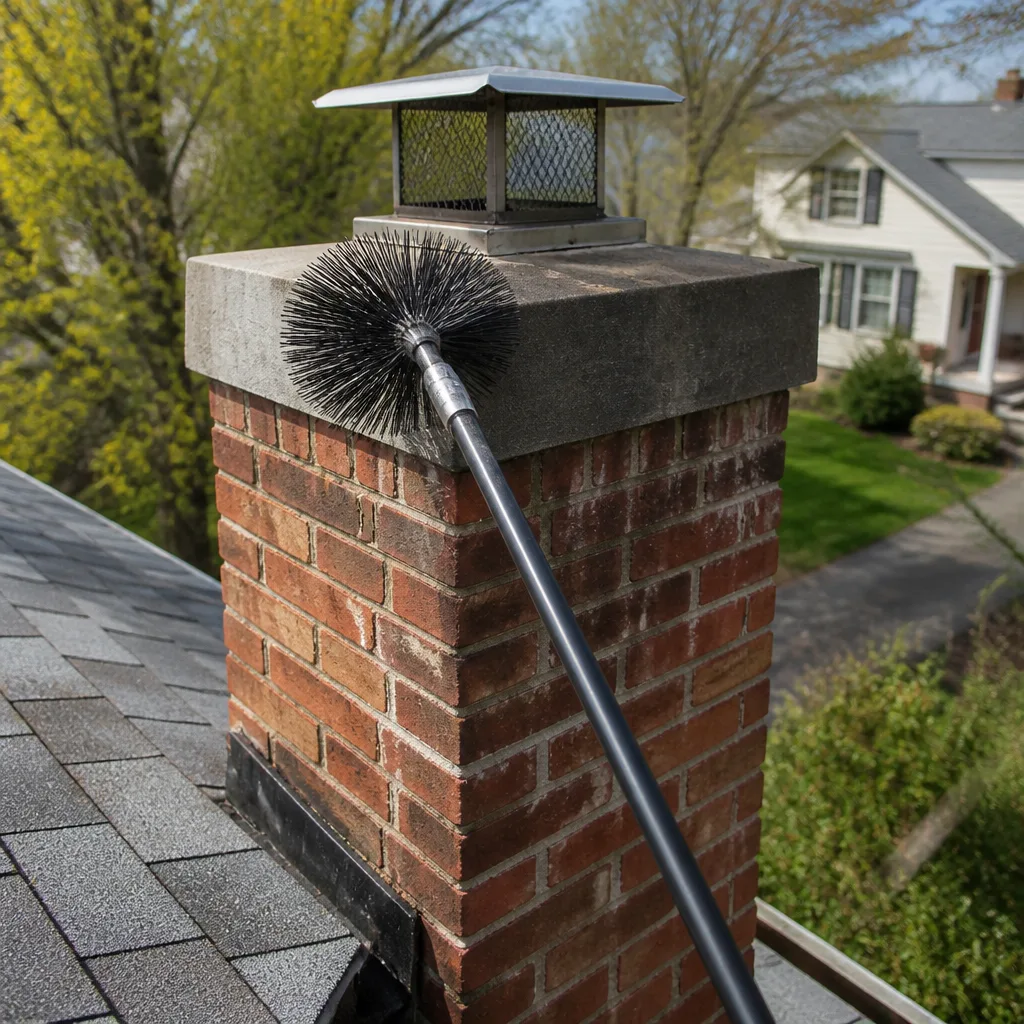 Sweep & inspection
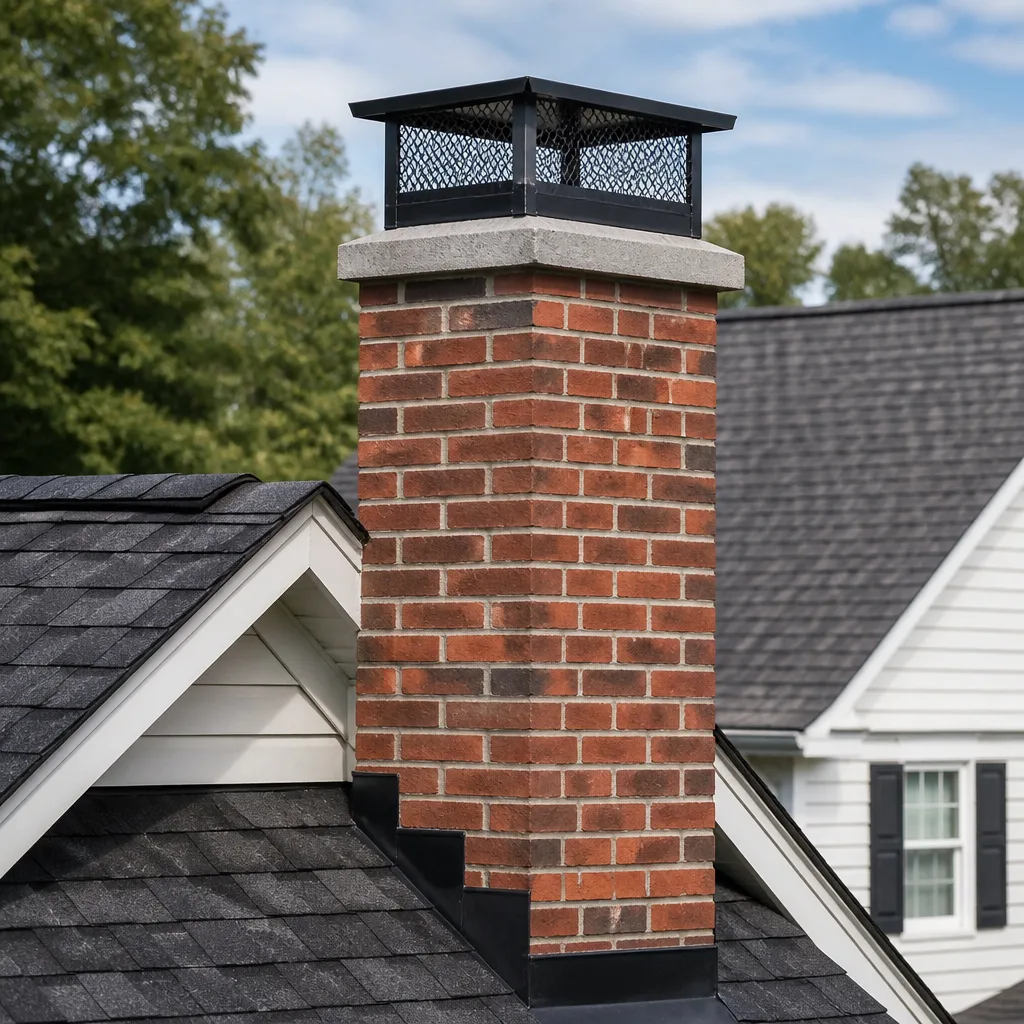 Caps & crowns
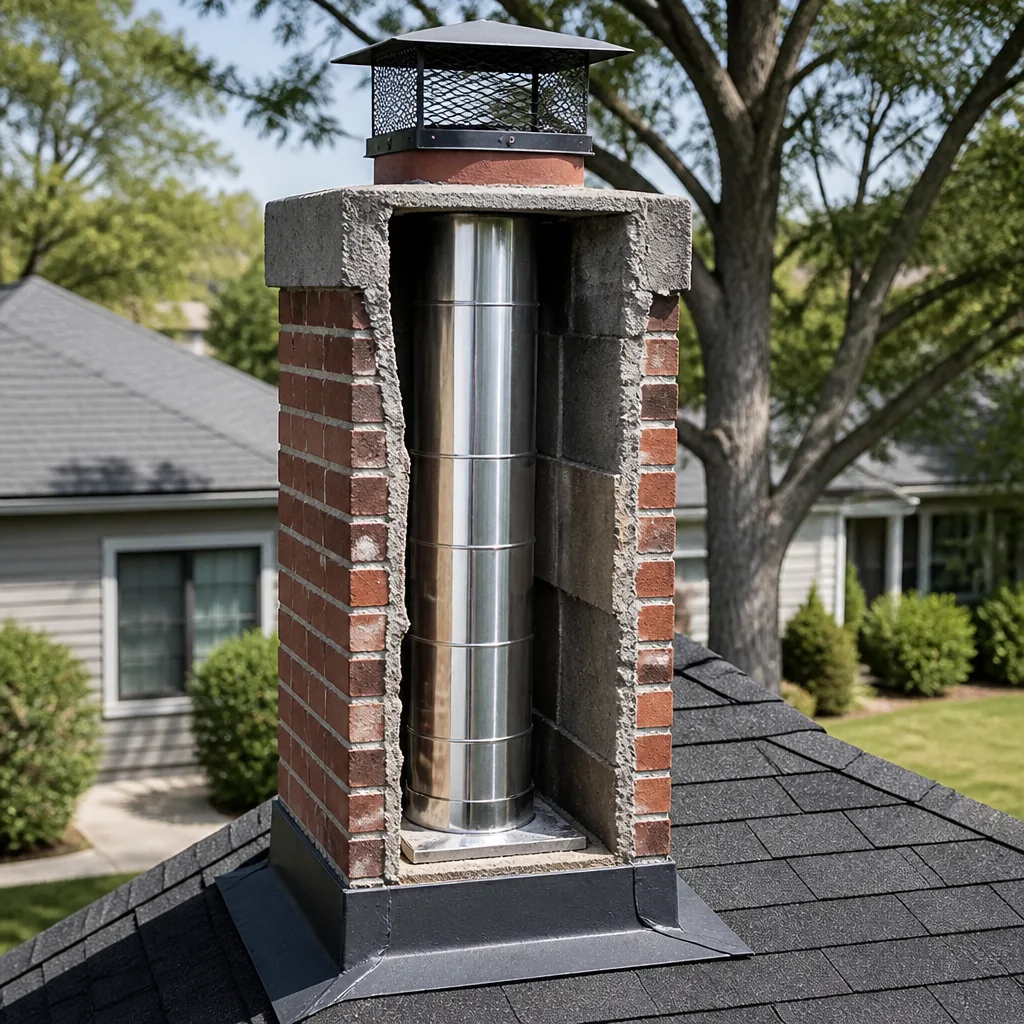 Flue relining
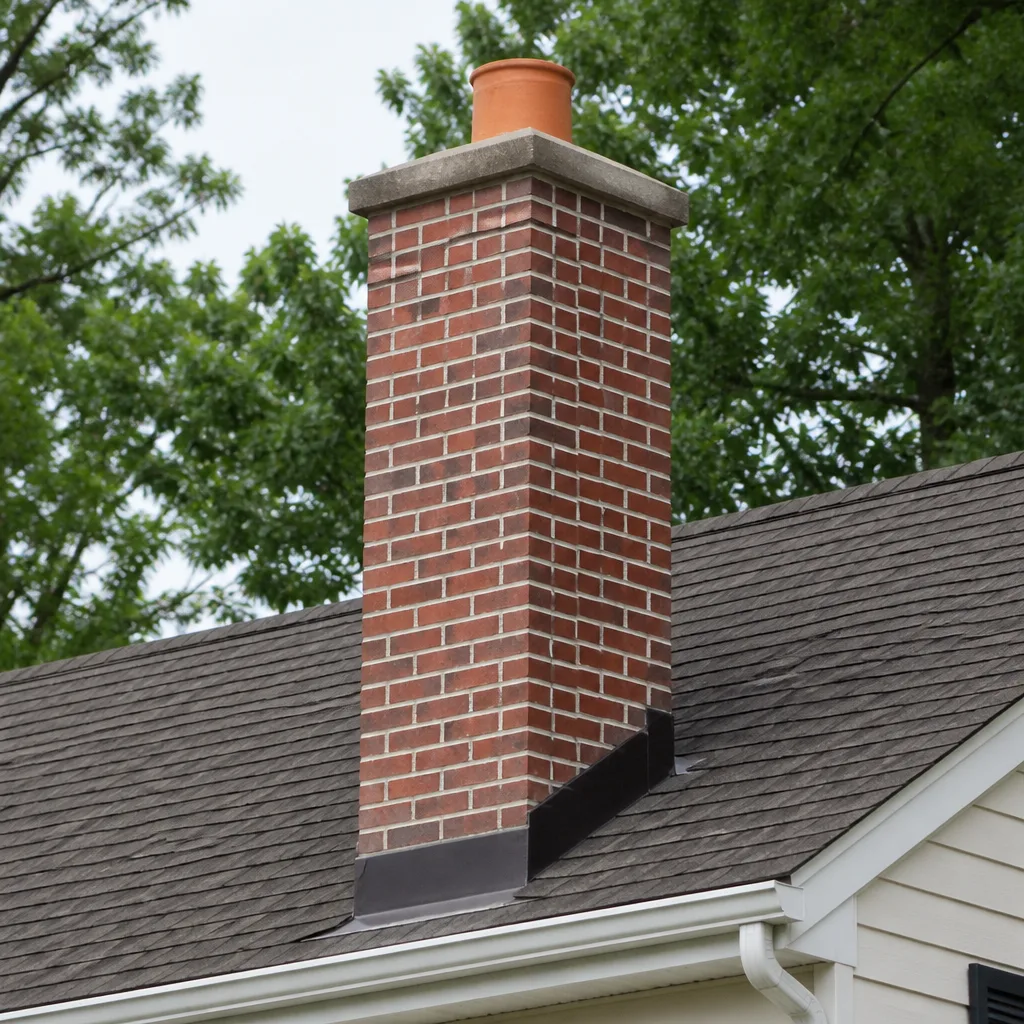 Masonry repair
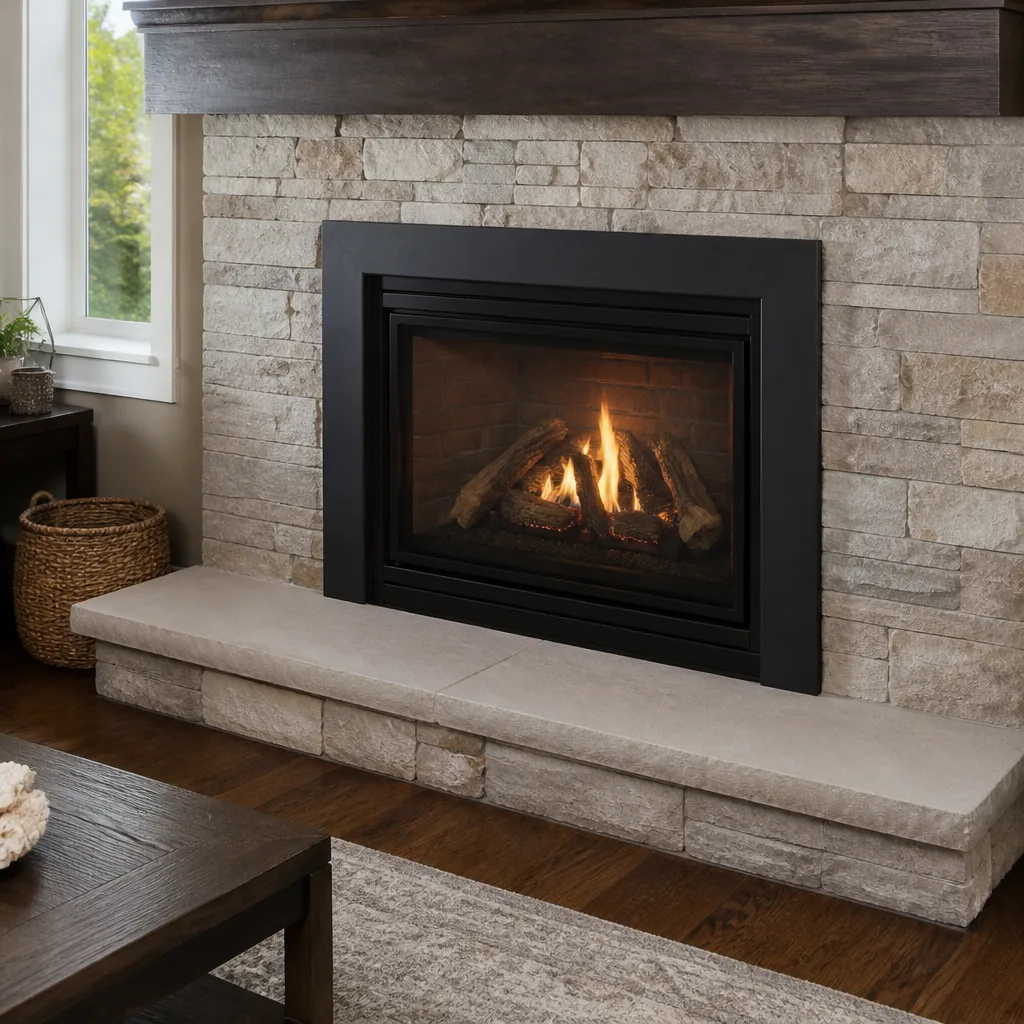 Gas fireplace service
Level 1 sweep and inspection to the NFPA 211 annual standard - flue, crown, cap, and flashing checked and photographed
Chimney sweep logs do not sweep chimneys. They loosen some creosote - which then falls where a brush and vacuum still have to collect it.
Seasonal Chimney Cleaning Care for Erie: Year-Round Homeowner’s Guide
Most chimney advice treats the year as four equal seasons. Erie doesn’t work that way. Here on the Front Range, your chimney faces two genuinely hard periods each year: the freeze-thaw swings of late fall and early spring, and the snowmelt that follows a Colorado winter. Everything else is preparation. A crown that cracks in a single March day of 40-degree temperature swings took less damage from the whole of January than from that one week. This guide restructures chimney care around what actually stresses a chimney in Erie, not around a calendar someone borrowed from a milder climate. You’ll learn when to schedule, what to check, and how to time your service calls to the events that matter.
Quick Answer
In Erie, Colorado, chimney care works best when it’s built around two stress periods (winter freeze-thaw and spring snowmelt) and two preparation windows (late summer before burning season, and early spring before the thaw). A single annual sweep is the baseline for most homes, but the timing matters more than the month. Schedule your sweep in late summer or early fall so the flue is clean before the first fire, then do a quick post-melt inspection in spring after snowmelt has had a chance to work on your crown, flashing and cap.
Styles & brands we work with
- Sweep & inspection
- Caps & crowns
- Flue relining
- Masonry repair
- Gas fireplace service
Table of Contents
- Why Erie’s Climate Changes the Chimney Calendar
- The Fall Pre-Season Sweep: Why Timing Matters in Erie
- What to Inspect After Erie’s Spring Snowmelt
- Summer Tasks Homeowners Can Handle Themselves
- Adjusting Cleaning Frequency by Burn Hours, Not Calendar
- The Case for a Brief Fall Inspection Even in Low-Use Years
- What Warning Signs Mean in an Erie Chimney
- When to Call a Professional
Why Erie’s Climate Changes the Chimney Calendar
Erie sits in that stretch of the Front Range where a sunny January afternoon can hit 55 degrees and the same evening drops into single digits. That swing is the whole story. Brick, mortar and crown concrete all absorb and release moisture at different rates, and when they expand and contract repeatedly in the same 24-hour window, small cracks widen. A chimney in a climate with a long, stable cold season sees less of this. Erie sees it constantly in the shoulder months of March and November, and that’s when most of the preventable damage actually happens.
We’ve watched this play out on hundreds of inspections across Erie homes. The chimneys that hold up best aren’t the newest ones. They’re the ones where the homeowner got the crown sealed and the mortar repointed before the shoulder months arrived, not after.
The three things Erie weather attacks
- The crown – the concrete cap at the top. Repeated freeze-thaw cycles open hairline cracks, water gets in, and a small crack becomes a piece of masonry repair within a couple of winters.
- Mortar joints – the soft mortar between bricks absorbs water and spalls when it freezes. On the sunny side of the chimney, this happens faster than on the shaded side, which is why so many Erie chimneys have one visibly worse face.
- Flashing – the metal seal where the chimney meets the roof. Erie’s wind and ice can work flashing loose, and once it separates, water goes straight into the attic or the ceiling below.
The practical takeaway: the goal of a year-round plan isn’t more service calls. It’s the same number of calls, timed to the events that actually cause damage. Late summer gets you ahead of the freeze-thaw season. Early spring catches the damage snowmelt may have exposed. That’s the entire structure of Erie chimney care in two sentences.
The Fall Pre-Season Sweep: Why Timing Matters in Erie
The right time to schedule a chimney sweep in Erie is late summer to early fall, ideally after the worst of the summer afternoon storms but before your first fire of the season. That window matters more here than in milder climates for two reasons. First, the Front Range fire season can extend well into fall, and a clean flue with no accumulated creosote is one less risk during a stretch when the whole region is on edge. Second, once the freeze-thaw cycle begins in earnest, we’re often busier and the weather makes exterior work on caps and crowns harder to schedule.
That said, “after fire season” and “before first fire” can be the same narrow window in Erie, sometimes only a few weeks apart. If you wait for the first cold snap to think about your chimney, you’ve already lost the best window. The homeowner who books in August and September isn’t just being organized; they’re avoiding the crunch that everyone else creates in October.
What a fall pre-season visit actually involves
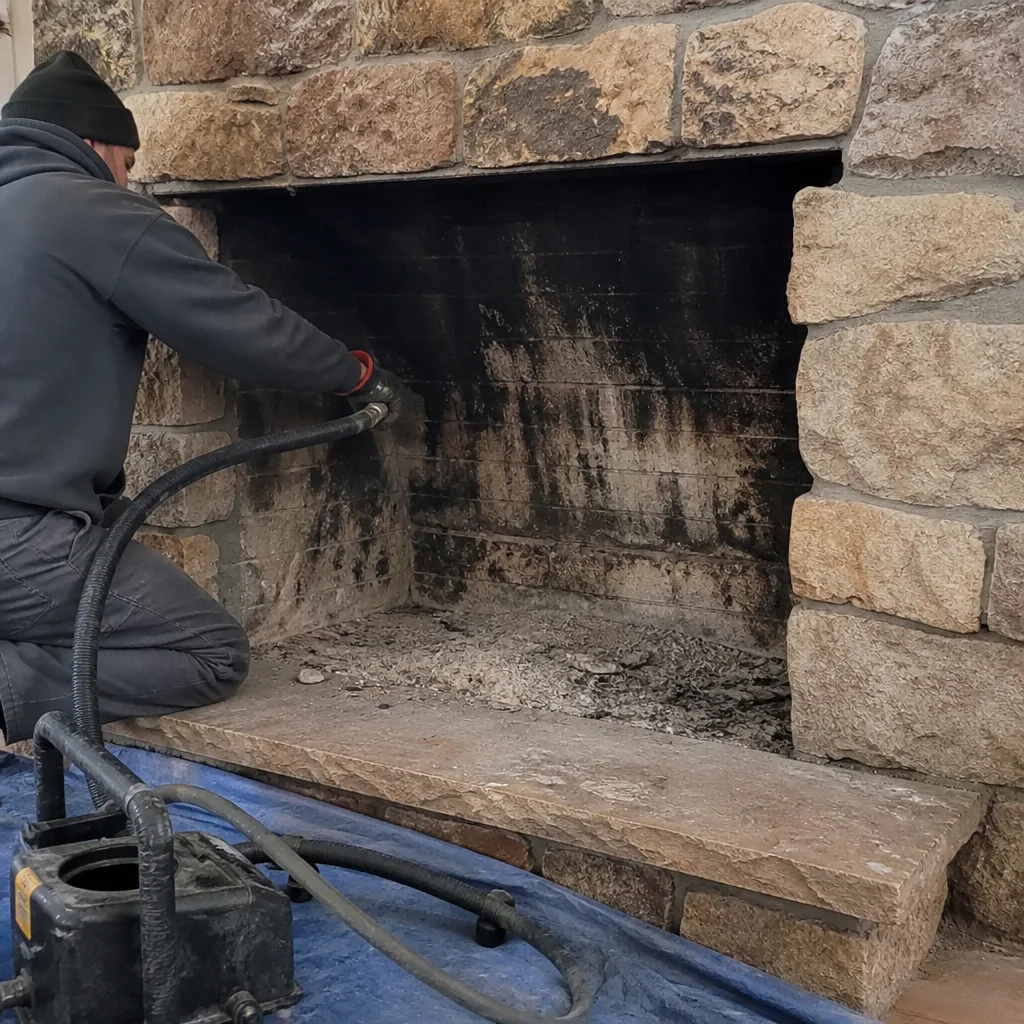
- Flue sweep. We clear creosote and soot from the flue using drop cloths and a HEPA vacuum so nothing drifts into your living room.
- Visual inspection of the firebox, damper and smoke chamber. This is where we catch problems that a sweep alone won’t reveal.
- Cap and crown check. Fall is when a missing or damaged cap is easiest to fix before it becomes a winter water problem.
- Exterior masonry review. We look at mortar joints, the crown and the flashing while the weather still allows repair work.
If the inspection turns up mortar or crown damage, fall is also the best time to get it repaired. Chimney repair work done in September and early October has time to cure before the freeze-thaw cycle starts punishing the masonry. The same repair done in January has to survive the winter rather than prepare for it.
What to Inspect After Erie’s Spring Snowmelt
The spring melt is Erie’s second stress event, and most homeowners skip it entirely. Once the snow is gone and the ground dries out, the chimney has just been through months of absorbing and releasing moisture, and the spring is when you find out whether it held up. A brief post-melt check is the single most underrated part of year-round chimney care here.
A spring inspection is different from a fall sweep. You’re not looking for creosote buildup (though we check for that too). You’re looking for signs the freeze-thaw cycle has opened something new.
The three post-melt checks that matter most
- Flashing separation. The metal seal at the roof line is the number-one path for water into a home. Look for lifted edges, gaps, or rust streaks on the siding below. If you see daylight under the flashing, water is getting in.
- Crown cracking. Hairline cracks that were invisible in fall can widen through spring melt and refreeze. A cracked crown lets water directly into the chimney structure, and it’s fixable if it’s caught at the hairline stage. Once chunks are missing, you’re looking at replacement.
- Cap displacement. Erie’s wind and ice can shift a chimney cap loose. A cap that’s been blown a few inches off its mortar bed looks fine from the ground but leaves the flue open to rain, snow and wildlife.
If any of these turn up, get them fixed before summer storm season. Water that enters through a cracked crown or loose flashing doesn’t just damage the chimney; it can travel down to the firebox, rust the damper and get into the ceiling framing.
Summer Tasks Homeowners Can Handle Themselves
Not every part of year-round chimney care needs a technician. Summer is the right time to do the simple visual checks that keep small problems from becoming winter repairs, and there are a few things you can safely do yourself without getting on the roof or opening up the flue.
What you can check safely
- Cap and screen check from the ground. Use binoculars from the yard. Look for a cap that’s tilted, missing, or has visible gaps in the screen. A damaged screen lets birds, squirrels and raccoons in.
- Animal exclusion inspection. Summer is nesting season in Erie, and a cap with a torn screen turns a chimney into a birdhouse in a few weeks. Look for bird activity around the flue from the ground; don’t climb up.
- Exterior masonry surface review. Walk around the chimney base from the yard and look at the brickwork. Crumbling mortar (looks sandy or flaky), white chalky staining (efflorescence, from moisture movement), or spalling brick faces (chipping off) all mean the masonry is taking on water.
- Draft and downdraft check. On a still summer day, open the damper and see whether you get a strong upward pull. A weak draft in summer can signal a partial blockage.
What you should not do yourself
Don’t climb onto the roof to inspect the cap or crown. Erie roofs are steeper than they look, and a fall from a roofline is a serious injury. Don’t try to reach into the flue to clear a nest or blockage; you can’t see what you’re doing and you can damage the liner. And don’t try to apply any kind of sealer to the crown or masonry without knowing whether the surface is sound first. Sealing a cracked crown traps moisture rather than keeping it out.
If a summer check turns up cracked masonry or a damaged crown, our chimney repair work is easier to schedule before fall. Summer is also a good time to book cap and crown work, since the weather allows proper curing.
Adjusting Cleaning Frequency by Burn Hours, Not Calendar
The “once a year” chimney rule of thumb isn’t wrong, but it’s incomplete. Cleaning frequency should scale with what’s actually going up the flue. A homeowner who burns a cord of seasoned hardwood every winter genuinely needs an annual sweep. A homeowner who burns a few fires on cold weekends may not. A homeowner who burns heavily with a poorly drafting stove may need two.
The rule we use in Erie: the more you burn, the more often you sweep, and the type of burn matters as much as the volume.
When one annual sweep is enough
- You burn a cord or less of seasoned hardwood per season.
- Your fires burn hot and clean, with visible flame and little smoke from the chimney top.
- You have an annual inspection and the flue shows only light soot buildup.
- You don’t smell strong creosote odor when the fire is out.
When one annual sweep is not enough
- You burn more than a cord per winter, or you supplement with regular fires through the shoulder months.
- You smell a strong creosote odor after fires, which usually means wet or glazed creosote is building up.
- You see black, flaky buildup inside the firebox or on the damper.
- You burn unseasoned (“green”) wood or softwood, which deposits more creosote per hour of burn.
- You’ve had a chimney fire at any point, even a small one.
If you’re in the second group, a single sweep in fall plus a quick inspection in spring is the right baseline. The spring visit will tell you whether a second sweep is needed before the next season.
The Case for a Brief Fall Inspection Even in Low-Use Years
If you barely burn a fire all winter, it’s tempting to skip the whole chimney care routine. That’s a mistake in Erie for reasons that have nothing to do with creosote. The risks that build during a low-use year are moisture and nesting, and neither one waits for you to actually use the fireplace.
The two risks that ignore your burn hours
- Moisture intrusion. A cracked crown, loose flashing or displaced cap lets water in whether or not you light a fire. Through a low-use winter, water inside the flue or smoke chamber can rust the damper, stain the firebox, and set up the spring for masonry damage.
- Nesting and blockage. Birds, squirrels and raccoons don’t check your burn log. A cap with a torn screen is an invitation, and a blocked flue is dangerous the first time you do light a fire, which is the wrong moment to find out.
A brief fall inspection catches both of these quickly. It’s not about how much you burned; it’s about whether the chimney is in condition to safely burn the next fire you light. If you’ve had any water intrusion in the past, or you’ve noticed a musty odor in the firebox, a fall inspection is even more important.
If the inspection finds mortar or crown damage, our fireplace repair work covers what’s inside the firebox as well as what’s outside it. If the problem is structural, our chimney repair service handles the masonry and crown.
What Warning Signs Mean in an Erie Chimney
The warning signs an Erie homeowner actually notices rarely line up with the calendar. They show up in the firebox, on the ceiling or out of the top of the chimney, and each one points to a specific kind of problem. Here’s how to read them.
Warning signs and what they usually mean
- Smoke rolling into the room when you light a fire. Often a draft problem: a partially blocked flue, a damper that doesn’t open fully, or a chimney that’s short for the surrounding roof. Sometimes a firebox repair issue.
- A strong, sharp creosote smell after fires. Glazed creosote buildup, which is the dangerous kind and needs a professional sweep, not a DIY brush.
- White chalky staining on the exterior brick. Efflorescence, which means moisture is moving through the masonry.
- Crumbling mortar or spalling brick on the exterior. Freeze-thaw damage; the mortar is softer than the brick and gives way first.
- Water stains on the ceiling below the chimney. Flashing separation or a failed crown. This is a “call now” sign, not a “call next fall” sign.
- Visible daylight or a missing cap from the ground. Cap displacement, an open flue, and an invitation to water and wildlife in one.
How we read a chimney in Erie
When we inspect an Erie chimney, we walk the full system: firebox, damper, smoke chamber, flue, crown, cap and flashing. Photographs go to the homeowner so they can see what we’re seeing. We don’t recommend work without camera evidence, and we’ll tell you plainly when a repair can safely wait until the next season. Our technicians have up to 9 years of experience walking through exactly this diagnostic sequence.
When to Call a Professional
Some chimney work is genuinely a technician’s job, and Erie’s climate makes that list a little longer than it is in milder places. Call us when any of the following turn up:
- Any chimney fire, even a small one. A fire inside the flue can crack the liner or warp the damper without obvious external signs.
- Water staining on the ceiling or siding below the chimney. Flashing separation and crown failure both get worse fast.
- Glazed creosote. The hard, shiny, tar-like kind that’s built up beyond what a brush and DIY effort can handle.
- A missing or displaced cap, or visible daylight down the flue. Water and wildlife exclusion are urgent before winter.
- Crumbling mortar, spalling brick, or a crown that’s cracked through. Repair before the next freeze-thaw cycle does more damage.
- A draft problem that keeps smoke rolling into the room. Draft problems are usually a flue or firebox issue, not a fire-building issue.
If you’re not sure whether you’re looking at a small issue or a serious one, that’s the right time to call. A brief inspection is a lot cheaper than a masonry repair scheduled after a full winter of water damage.
Chimney Sweep Erie offers free estimates in Erie – call (833) 468-5631. We answer 24/7. Fast dispatch from 7am to 7pm, Sunday through Friday.
Common Mistakes to Avoid
- Timing the annual sweep to the first cold snap. The best window in Erie is late summer to early fall, before the shoulder-month freeze-thaw cycle begins. Waiting until the first freezing night means scheduling against everyone else’s panic, and it leaves no time for repair work if the inspection turns up damage.
- Skipping the spring post-melt inspection. The spring melt is when crown cracks, flashing separation and cap displacement show up. A brief spring look after the snow melts catches these before summer storms push water further inside.
- Sealing a crown without confirming it’s sound. Sealing over a cracked or already-damaged crown traps moisture inside the concrete and makes the eventual repair more expensive. Resurfacing with a proper material like HeatShield is a repair, not a sealer, and it’s done after the surface is prepared.
- Burning green or soft wood to save money. Unseasoned wood deposits far more creosote per hour of burn than seasoned hardwood. In an Erie winter where you’re burning regularly, that buildup accelerates fast.
- Assuming a low-burn winter means a skip-year is safe. Moisture and nesting ignore your burn log. A chimney that sat unused all winter can still be wet, cracked or blocked by spring.
- Climbing onto the roof to check the cap or crown yourself. Erie roofs are steeper than they look. A cap check from the yard with binoculars is safe; a trip up the ladder is not.
- Capping the chimney with a generic hardware-store cover. A cap is sized to the flue and needs to let smoke out while keeping water and animals out. An ill-fitting cap can restrict draft or blow loose in Erie’s wind. We work with proper chimney-industry brands like Copperfield and Olympia Chimney for caps that fit the flue and hold up.
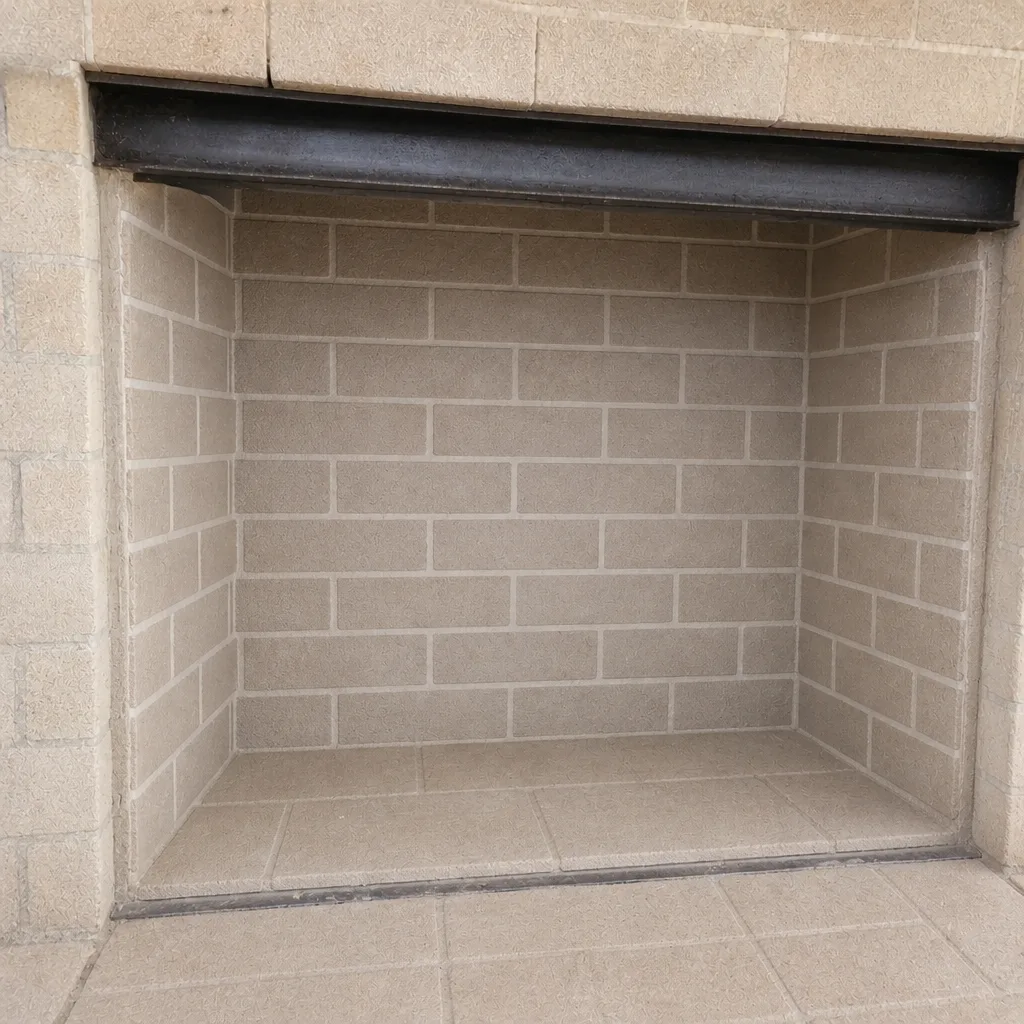
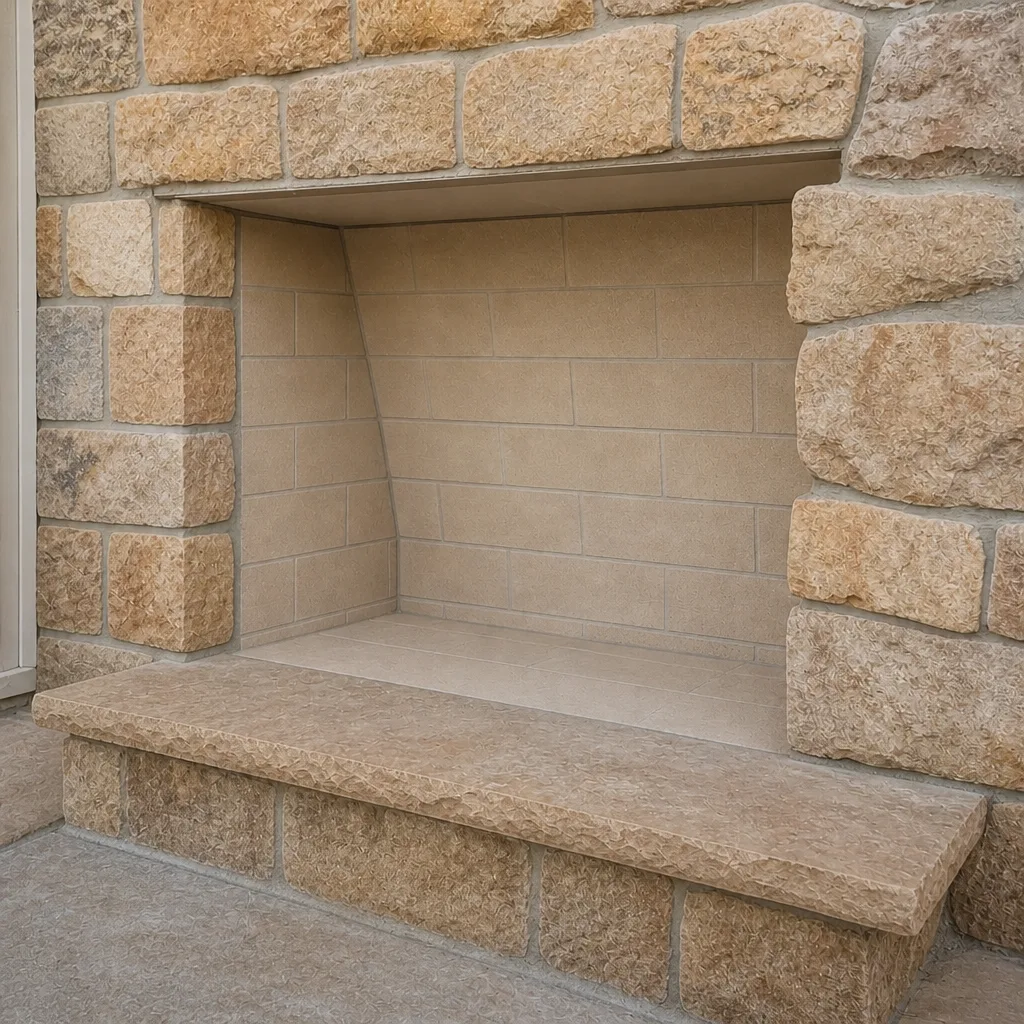
See the difference
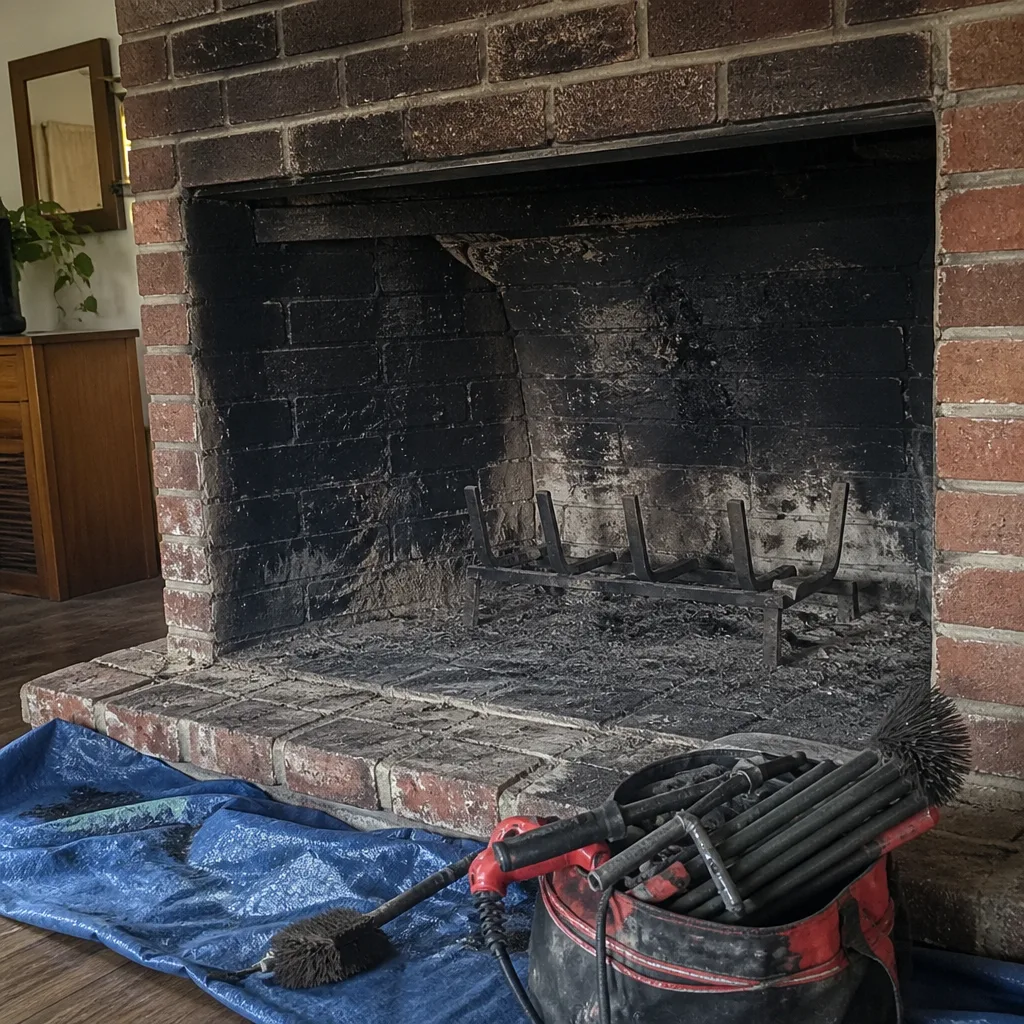 Before
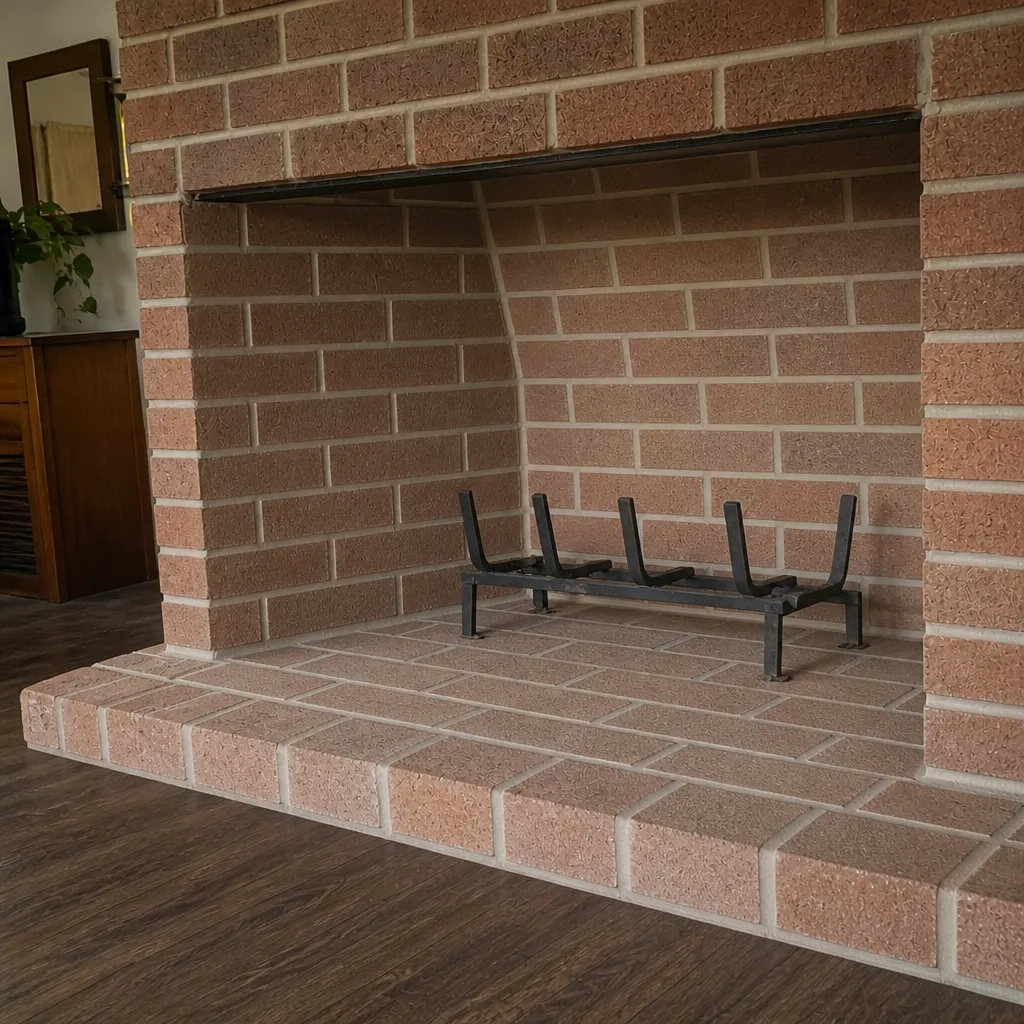 After
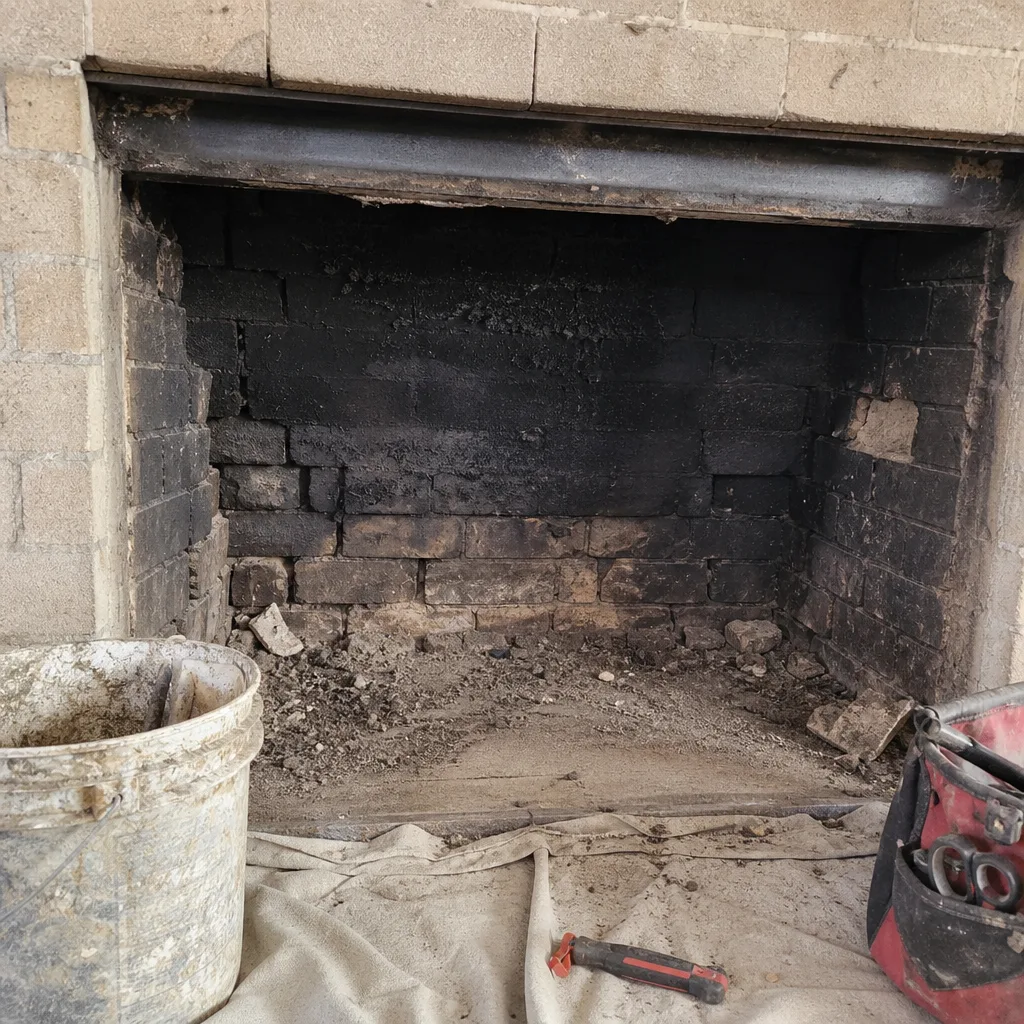 Before
 After
 Before
 After
When to Call a Professional (What to Expect)
When you call Chimney Sweep Erie, the first thing we do is figure out what your chimney actually needs, not what the calendar says it should need. We use a camera inspection and give you a photo report you can see for yourself, so you’re never told you need a repair without evidence. Our technicians have up to 9 years of experience, and we work with professional-grade industry brands, including DuraFlex for relining, HeatShield for liner repair and restoration, and Famco and Gelco components, rather than off-the-shelf substitutes.
We also do the full chimney system: sweep, inspection, fireplace repair, chimney repair, and cap and crown work, all in one place. You don’t get handed to a second contractor halfway through the job. If you’re not sure whether you need a sweep or a repair, the right move is the inspection first, then decide together what to book. Call (833) 468-5631 for a free estimate.
Frequently Asked Questions
Most Erie homes need one annual sweep, timed in late summer or early fall. Homes that burn more than a cord of wood per season, burn often in the shoulder months, or burn unseasoned wood may need a second sweep before the next season. The right answer depends on your burn hours and what the inspection shows, not on a fixed calendar.
Erie’s freeze-thaw cycles start earlier and swing wider than in many other parts of Colorado, which means the masonry repair window closes sooner. A sweep and inspection completed in late summer leaves time to get crown or mortar work done before the freeze-thaw cycle begins. The same work scheduled in November or December has to survive the winter rather than prepare for it.
Yes, if it fits your budget. The spring melt is the best time to spot flashing separation, crown cracks and cap displacement that the winter freeze-thaw cycle opened up. Catching these at the hairline stage is far less expensive than waiting until fall to find them grown into masonry or ceiling damage. A brief spring walk-through is the single most effective addition to an annual sweep routine in Erie.
It’s not the burn that matters most in a low-use year. Moisture intrusion and nesting happen whether or not you light a fire. A brief fall inspection catches a cracked crown, loose flashing or a displaced cap before winter, which protects the chimney even if you never build a fire. If you burned even a few fires, a visual inspection of the firebox and damper is still worth doing.
A cracked crown lets water directly into the chimney structure. That water freezes and expands in the next cold snap, and the crack widens. Left long enough, water travels down to the firebox, rusts the damper, and can work into the ceiling framing. Crown repair or resurfacing is far cheaper than the structural repair that a neglected crack eventually demands.
Call now if you see water staining on the ceiling or siding below the chimney, a missing or displaced cap with daylight visible down the flue, spalling brick or crumbling mortar, or if you’ve had a chimney fire. Any of these get worse through another freeze-thaw cycle. A brief inspection tells you exactly what’s wrong and what can safely wait. Call (833) 468-5631 and we’ll schedule a free estimate.
The Bottom Line
Erie’s chimney care works best when you plan around what actually stresses a chimney here, not around four equal seasons. Late summer gets your sweep and any repair work done before the freeze-thaw cycle starts. Late spring catches what the snowmelt exposed. Adjust your frequency by burn hours, not by habit, and don’t skip the fall inspection just because you didn’t burn much last winter. Moisture and nesting ignore your burn log. The homeowner who books one well-timed sweep and one post-melt look each year protects the chimney more effectively than the homeowner who books two calls in the wrong months.
Chimney Sweep Erie handles the full chimney system, from the firebox to the crown, with professional-grade materials like DuraFlex and HeatShield. We work with Famco and Copperfield for caps and components, and we do the work in-house rather than handing you off to a second contractor. One inspection can tell you exactly what your chimney needs, and what it doesn’t. Call (833) 468-5631 for a free estimate. We answer 24/7. Fast dispatch from 7am to 7pm, Sunday through Friday. Our technicians have up to 9 years of experience. Preventive chimney care costs a fraction of what deferred repairs do.
Written by the team at Chimney Sweep Erie.