
Last updated November 24, 2026
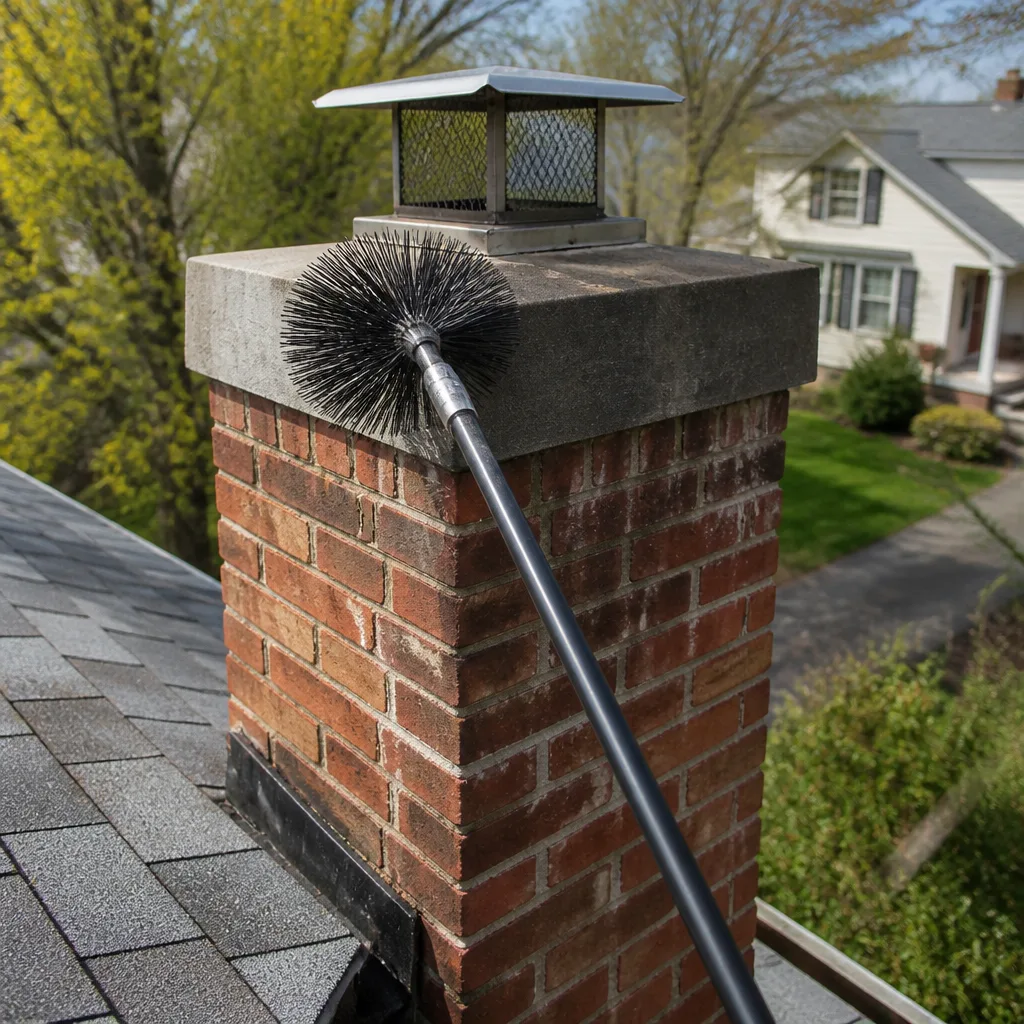 Sweep & inspection
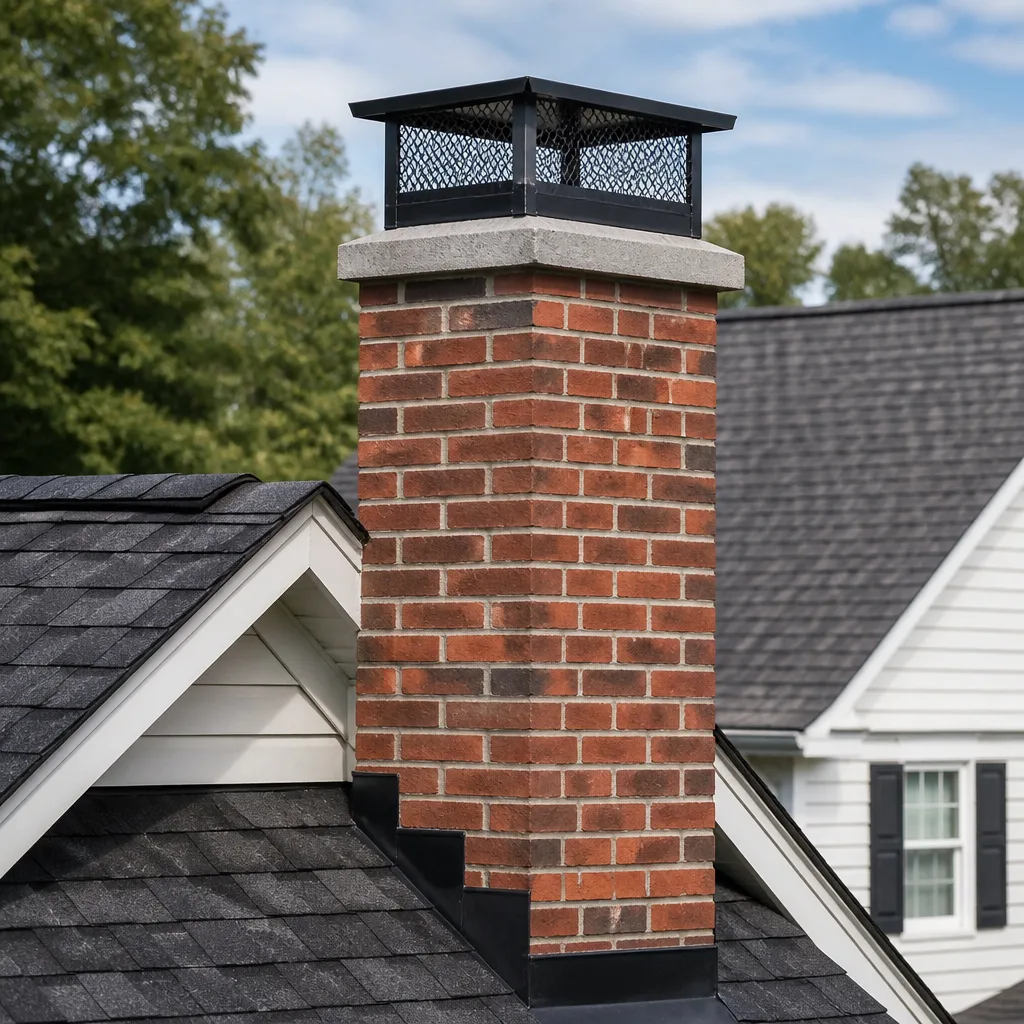 Caps & crowns
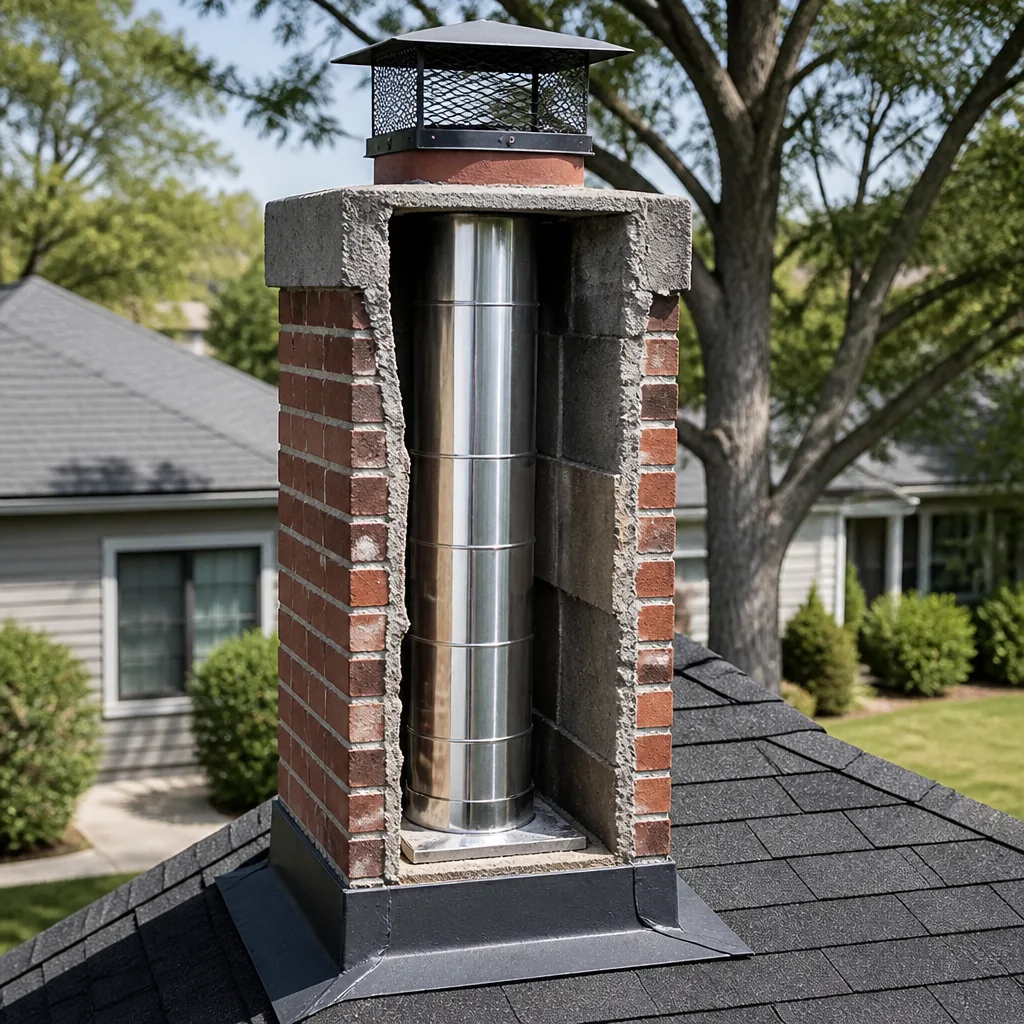 Flue relining
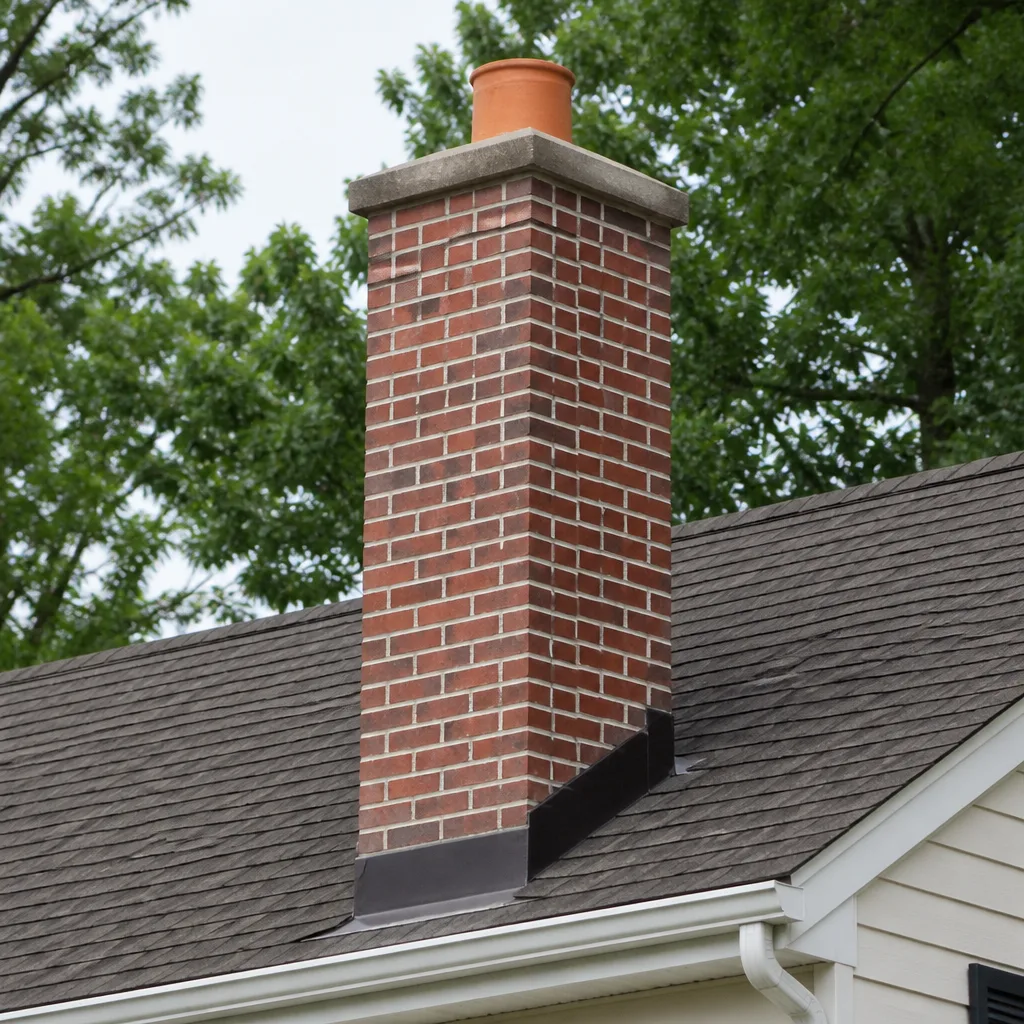 Masonry repair
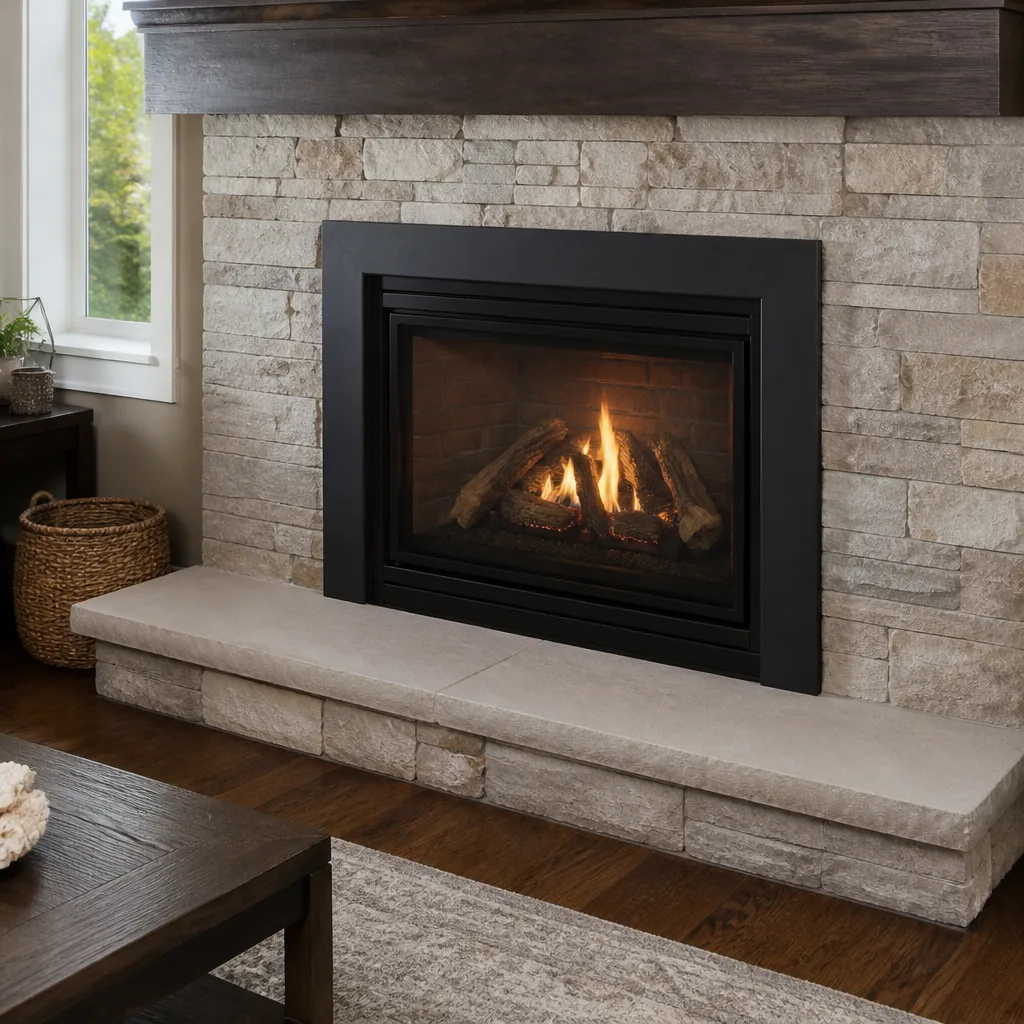 Gas fireplace service
Level 1 sweep and inspection to the NFPA 211 annual standard - flue, crown, cap, and flashing checked and photographed
Chimney sweep logs do not sweep chimneys. They loosen some creosote - which then falls where a brush and vacuum still have to collect it.
Chimney Sweep Maintenance Checklist for Erie Homeowners
If you asked most homeowners to name the biggest chimney risk, they’d say creosote. In our experience, that’s not the problem that does the most damage in Erie. It’s hairline mortar cracking that sits unnoticed for two or three freeze-thaw cycles until water works its way in, soaks the masonry, and turns a five-minute repointing job into a full crown rebuild. The window between those two outcomes is measured in seasons, not years, and it usually closes quietly. This guide gives you a component-by-component checklist you can actually run yourself: what “normal” looks like at the firebox, damper, smoke chamber, flue, crown, cap, and flashing, which warning signs mean call now, which mean write it down and report it at the next sweep, and how to photograph your chimney so you can show a technician exactly what changed and when.
Styles & brands we work with
- Sweep & inspection
- Caps & crowns
- Flue relining
- Masonry repair
- Gas fireplace service
Quick Answer
A thorough chimney maintenance checklist for an Erie home covers seven components – firebox, damper, smoke chamber, flue, crown, cap, and flashing – checked at three points in the year: before heating season starts, after it ends, and once mid-season. The homeowner’s job is visual observation from ground level and inside the firebox, plus photo documentation each time. The technician’s job is the camera inspection, sweeping, and any repair. Anything involving the flue interior, gas lines, or roof-level masonry should be evaluated by a trained professional, not handled from a ladder.
Table of Contents
- Why a Checklist Beats a Calendar Reminder
- Component-by-Component: What Normal Looks Like
- Ground-Level Checks After Erie’s Freeze-Thaw Cycles
- How to Document Your Chimney Year Over Year
- Immediate Attention vs. Watch-and-Report
- Seasonal Timing for Erie’s Weather Calendar
- What a Professional Checks That You Can’t
- Common Mistakes to Avoid
- When to Call a Professional
- Frequently Asked Questions
- The Bottom Line
Why a Checklist Beats a Calendar Reminder
“Get your chimney swept once a year” is decent advice that fails in practice, because it tells you nothing about what to look at between those visits. A calendar reminder creates a passive relationship with your chimney: once a year someone shows up, does something in the flue, and leaves. A checklist creates an active one. You learn what your chimney normally looks like, so the season something changes, you notice.
The distinction matters more in Erie than in milder climates. Erie sits at the base of the foothills, where the temperature swings hard in both directions within a single week in fall and spring. Masonry expands when it warms and contracts when it cools. Water gets into a hairline crack during a wet snow, freezes overnight, expands, and widens that crack a fraction. Repeat that a few dozen times across a winter and a hairline becomes a real gap. By the time water is visibly staining the firebox, the damage has usually been building for more than one season.
Homeowners who run a checklist catch those changes while they’re still cosmetic. Homeowners who rely on the annual reminder alone often first learn about a problem when they’re looking at repair options rather than maintenance ones. That’s the gap this guide closes. Here’s what to look for, when to look, and what to write down.
One thing to understand about scope up front: this checklist is about observation and documentation. It isn’t a set of repair instructions. Chimney work happens at height and involves combustion byproducts, so the observation is yours and the work is a professional’s.
Component-by-Component: What Normal Looks Like
The hardest part of a self-check is not knowing what’s wrong. It’s not knowing what normal is, so everything looks either fine or alarming. Here’s a component-by-component breakdown of what a healthy chimney looks like, what you can reasonably check yourself, and what’s out of reach.
Firebox
Normal: brick or refractory panels with tight joints, no missing chunks, and no white chalky bloom on the surface. The chalky bloom is called efflorescence and it’s a water indicator, not a cosmetic nuisance. What to check: run a hand over the firebox walls and look for loose mortar or spalled brick faces. Hairline cracks in firebrick are common and often benign; cracks wide enough to slip a coin into are not.
Damper
Normal: the damper opens and closes smoothly, sits flush when closed, and doesn’t wobble on its hinge. What to check: with a cold firebox, open and close it a few times. It should move without grit or grinding. A damper that sticks open is a heat-loss and draft problem; one that won’t fully close is also a carbon monoxide path into the room if other conditions line up wrong, which is why a sticking damper is worth reporting even if it seems minor.
Smoke Chamber
Normal: a smooth, sloped interior that funnels smoke into the flue. What to check: from the firebox, look up with a flashlight. You’ll see the smoke shelf at the back. What you’re looking for is rough, crumbling, or heavily creosote-coated surfaces. This is a camera-inspection zone for a technician, but a visual from below tells you whether something needs a closer look.
Flue
Normal: an even, unobstructed interior with no cracked tiles (in a masonry flue) or gaps and sagging (in a liner). What to check: from the firebox with a flashlight, look for obvious blockages – nests, leaves, a detached damper plate. Beyond that, the flue interior needs a camera. Creosote glazing is not something you can assess from below, and this is exactly the kind of condition that only a professional inspection can rule in or out.
Crown
Normal: a concrete cap at the top of the chimney that slopes gently away from the flue and overhangs the masonry slightly. What to check: from the ground with binoculars, look for cracking, a crown that’s pulled away from the flue tile, or a crown that’s flat or sloped toward the flue instead of away. A crown that fails sends water straight down into the masonry every time it rains or snow melts.
Cap
Normal: a cap with mesh sides that covers the flue opening and keeps rain, birds, and debris out while allowing exhaust up. What to check: from the ground, confirm a cap is present, sitting level, and not rusted through or missing mesh panels. A missing cap is one of the most common entry points for water damage and animal nesting in Erie, and it’s also one of the cheapest things to fix.
Flashing
Normal: metal flashing where the chimney meets the roof, sealed and laying flat, with no lifting, gaps, or rust-through. What to check: from the ground or from a window with a view of the roof, look for lifted edges, missing sealant, or daylight you can see through. Flashing is the single most common source of roof leaks that get blamed on the chimney itself.
Ground-Level Checks After Erie’s Freeze-Thaw Cycles
You don’t need to get on the roof to catch most of what matters. Erie’s freeze-thaw pattern – warm afternoons, hard overnight drops, wet snow followed by sun – is the engine that drives masonry deterioration, and much of it shows up in ways you can see from the yard.
Walk out with binoculars after any stretch of freeze-thaw weather and look for these specific signals:
- White staining on the exterior masonry. Efflorescence is water-soluble salts pushed to the surface by moisture moving through the brick. It’s cosmetic on its own, but it’s a reliable indicator that water is getting in somewhere.
- Crumbling or falling mortar joints. Look at the horizontal and vertical joints between bricks. Recessed, sandy, or missing mortar means the joint is failing. This is the “two or three seasons unnoticed” problem in its earliest stage.
- Spalled brick faces. When brick face pops off and leaves a rough divot, moisture inside the brick froze and pushed outward. Widespread spalling says the masonry is taking on water.
- A crown that looks cracked or separated. Cracked concrete at the top, or a crown visibly pulled away from the flue tile, needs a close look by a technician.
- Metal turned orange or flaking. Rust on the cap or flashing is corrosion from trapped moisture, not just age.
- Dark staining on the chimney’s exterior. A streak or dark band usually means smoke or creosote finding a path out, often through a failing joint or crown.
- Tilt or lean. Even a slight lean in the chimney above the roofline is a structural signal, not a cosmetic one. Call a professional about that one promptly.
Make these observations after the last hard freeze in spring, since winter is when freeze-thaw damage accumulates. Note what you see and photograph it, which brings us to the next section.
How to Document Your Chimney Year Over Year
The single most useful habit in chimney maintenance is keeping a photo log. It converts “I think it’s been getting worse” into “here’s the crack in March, here’s the same crack in October.” A technician can then see the rate of change, not just the current state. Rate of change is often what separates a repointing job from a rebuild.
Here’s how to do it in a way that’s actually useful:
- Pick fixed reference points. Choose one spot from which you photograph the chimney exterior (a corner of the yard, a specific window), one spot inside the firebox, and one in front of the fireplace showing the hearth and surround. The same vantage point every time is what makes comparison possible.
- Photograph at the same time each year. Do the exterior set right after the heating season ends, and again just before you start burning in fall. Two sets a year, same angles.
- Zoom and crop. After taking wide shots, zoom in on each of the seven components from earlier in this guide: crown, cap, flashing line, mortar joints at eye level, and the firebox walls. Small cracks photograph poorly in wide shots.
- Use a scale reference. Put a coin, a pencil, or a ruler next to a crack you’re tracking. That’s how you’ll know next year whether it grew.
- Write a one-line note per photo. Date, what you’re looking at, and what you noticed. Keep it in a folder on your phone.
- Bring the folder to your appointment. Show your technician the sequence. They’ll tell you what they see on camera and how it lines up with what you’ve documented.
Beyond photos, keep a simple log of date, service performed, and any findings. That log becomes genuinely valuable when a technician is deciding whether a given crack is new or long-standing. If you’ve never had your chimney inspected and don’t have a baseline, a chimney inspection with camera and photo documentation is the sane starting point – it establishes the reference photo set for everything that comes after.
Immediate Attention vs. Watch-and-Report
Not every finding needs action right now. The problem with “call a professional about everything” is that it trains homeowners to panic over cosmetic issues, and the problem with “it’s probably fine” is that it trains them to ignore real ones. Here’s a practical split.
Call now
- Any visible lean or tilt in the chimney above the roofline.
- A crown that’s separated from the flue tile or cracked through.
- Missing cap, or a cap that’s been knocked loose and is sitting crooked.
- Flashing that’s lifted or has visible gaps with the roofline.
- Spalled brick on the chimney itself, especially on the weather-facing side.
- White staining that has appeared or spread significantly in one season.
- Smoke backing up into the room when you light a fire, or a strong smoky smell in the house when the fireplace isn’t in use.
- Any indication of cracking or separation in the firebox refractory panels.
- A broken or missing damper that won’t hold open or closed.
Watch and report at your next sweep
- Efflorescence on the firebox walls that isn’t spreading.
- Hairline cracks in the firebox brick that haven’t grown since last season.
- A cap with mild rust that’s still sealed and level.
- Sandy mortar at a few joints on the chimney’s exterior, without spalling.
- A sticky damper that still opens and closes fully.
The distinction between these two lists is one of the reasons we photograph and hand the images over. When a technician tells a homeowner they need repair, that homeowner should be able to see the crack, joint, or crown condition themselves on a photo taken from the same trip. In our experience, being able to look at the evidence and say “that’s bigger than it was last year” is what turns a chimney recommendation from a leap of faith into a decision.
Seasonal Timing for Erie’s Weather Calendar
Seasonal timing in Erie follows the shoulder months, not the calendar holidays. Here’s the practical rhythm:
Pre-season: late summer into early fall
Book your sweep and inspection before you start burning, ideally once the nighttime temperatures are dropping but before the first full heating season. Getting the sweep done first means the firebox, flue, and damper are clear going into the season. Book early enough that if anything needs repair, you have scheduling room before the cold locks in. This is also when you look at your photo log from the previous year and compare.
Throughout heating season: a mid-season visual pass
Once a month or so, with a cold firebox, run the flashlight check from below. You’re not sweeping; you’re watching. Look for new soot patterns, damper stickiness, and unusual smells. Mid-season is a good moment to look at the exterior again if the roof has shed snow and you have a clear view of the chimney.
Post-season: spring after the last hard freeze
This is the highest-value check of the year in Erie specifically, because freeze-thaw damage accumulates across winter. Take your exterior photos after the last hard freeze and before the leaves come in on nearby trees, since after that you may not have a clear line of sight. If your inspection revealed any watch-list items last fall, this is when you check whether they’ve grown. Spring is also a smart time to catch crown, cap, or flashing problems while there’s a full repair season ahead.
Late winter: the second look
If bare roof peaks at the chimney, that’s your cue to glance at the crown, cap, and flashing when the view is clearest. This one’s opportunistic rather than scheduled, but it’s worth taking.
A quick note on the checklist’s total time. The firebox and damper checks are a few minutes. The ground-level binocular pass is maybe ten minutes. The photo documentation adds five. So the whole routine is well under an hour, twice a year, and that’s the entire homeowner-side investment.
Pair this routine with a professional visit each year and you have a complete maintenance cycle. If you haven’t scheduled a chimney sweep yet this season, doing it before the first fire is the simplest way to start your baseline.
What a Professional Checks That You Can’t
The homeowner checklist is the outer layer. The professional checklist is the interior, and it goes well beyond what any ladder-based self-check can honestly see. Here’s what a real inspection covers.
Camera inspection of the flue
A camera run down the flue reveals glazed creosote, cracked liner tiles, gaps in a stainless liner, and hidden obstructions. These conditions are essentially invisible from below and are why “I looked up with a flashlight and it seemed fine” isn’t a clean bill of health. This is the piece homeowners should specifically ask about when booking.
Draft and combustion
How well the chimney pulls is a function of flue sizing, house tightness, and the firebox. A technician can test and diagnose draft problems that produce smoke spillage or poor burn. This is one of those areas where a guess is worse than useless.
Liner condition and code compliance
Modern flue liners are engineered for the specific fuel and appliance they serve. If your liner is unlined, cracked, or sized for a different appliance, a technician identifies it and can recommend the correct replacement. Replacing a failed liner typically means a system like DuraFlex flexible liner, which is sized and specified for the appliance. A professional-grade liner is engineered specifically for the temperature swings and corrosion environment inside a chimney, in a way that generic materials are not.
Refractory and resurfacing
When the flue has lost its smooth, sealed surface, resurfacing restores it without a full liner replacement in some cases. HeatShield is the recognized resurfacing system for this job, and it’s specified for chimney environments rather than pieced together from general masonry materials.
Crown, cap, and flashing
The top of the chimney is where most water entry begins. A technician evaluates the crown for slope and separation, the cap for integrity and fit, and the flashing line for a proper seal. When crown replacement is needed, doing it with the right material matters – a crown that doesn’t slope correctly just restarts the clock. Cap and crown work is available as a preventive service in its own right, and it’s often the highest-return maintenance spending a homeowner can make on the chimney.
Firebox and fireplace
Refractory repair, firebox rebuild, and damper replacement are all in scope of full chimney care. This is one area where a single-trade chimney specialist has a real advantage over a generalist: the person looking at your firebox evaluates fireboxes every working day, not once a month between roof jobs and HVAC calls.
In our experience, the difference between a good and a poor maintenance program comes down to whether the professional side of it produces material you can see: photos, a written report, and a photograph of the flue interior. When those exist, nothing about the recommendation is a mystery.
Why materials matter
The brands in a chimney system are not marketing trim. A crown that cures and cures to a slope is a different product from a bag of generic mortar. A liner that’s rated for the flue’s temperature range is a different product from a length of flexible duct. We work with a specific roster of professional chimney-industry brands – DuraFlex, HeatShield, Gelco, Olympia Chimney, Famco, and Copperfield – because the material behind a repair matters as much as the labor doing it, and we’d rather specify a system engineered for chimneys than substitute store-aisle components. When a homeowner tells us what their last contractor used, we can often guess what’s likely to fail first. When they don’t know, that’s the first thing we ask.
Full-system coverage matters too. Sweeping, inspection, fireplace repair, chimney repair, and cap and crown work are handled by one company, so a project doesn’t stall while a homeowner hunts down a second contractor to finish the piece the first one doesn’t do. For firebox-level problems, fireplace repair is where that single-trade focus pays off most directly. When the masonry or crown itself needs work, it falls under chimney repair and is handled with the same materials discipline.
Common Mistakes to Avoid
- Treating the annual sweep as the whole program. The sweep is one visit; the checklist runs all year. Skipping the between-visit observations is how a hairline crack gets two full seasons of unnoticed freeze-thaw damage.
- Looking at the chimney only when something is obviously wrong. By the time a problem is obvious to a homeowner from the ground, it’s usually no longer in the inexpensive category. The value of a checklist is catching things while they’re small.
- Photographing from a different angle each year. Comparison requires the same vantage point. Two consecutive years of “a rough photo from the driveway” don’t tell a technician anything useful about whether a crack is growing.
- Using binoculars once and declaring the crown fine. A crown that’s cracked through but still seated looks intact from a distance. Zoom in and photograph it; let a professional confirm what you’re seeing.
- Sealing flashing, mortar, or crown yourself without addressing the cause. Sealant over a wet joint traps the water rather than keeping it out. The reason professional evaluation comes first is that the location of the water entry and the visible symptom are often not the same spot.
- Putting off a spring check because “burning season is over.” Spring is when freeze-thaw damage shows up most clearly in Erie, and it’s also when fixing it leaves a full season of repair weather ahead.
- Choosing a generalist for chimney work to “save a call.” A chimney specialist looks at flues, fireboxes, crowns, and masonry every day. A handyman or roofer looks at them rarely, and that difference tends to show up in the second repair, not the first.
When to Call a Professional
Call a professional when any item on the “call now” list above is present, when you haven’t had the chimney swept and inspected before this heating season, or when you simply have no baseline to compare against. Call sooner if you smell smoke indoors, notice staining that’s new or spreading, or see any lean in the chimney. Call before you burn for the first time after a long gap, especially if the house is new to you or the fireplace hasn’t been used in a while.
Call us for the routine version of this too – pre-season sweep, camera inspection, and a photo report that becomes your reference set. Chimney Sweep Erie offers free estimates in Erie. Call (833) 468-5631. We answer 24/7. Fast dispatch from 7am to 7pm, Sunday through Friday. The local pro who arrives is licensed and insured as their state requires, and the written estimate you get sets the final price – the flat-price figure is agreed before the booking, not after the work.
Frequently Asked Questions
Three times per year: before heating season, once mid-season, and after the last freeze in spring. The professional sweep and inspection is once a year, and homeowners with heavy fireplace use should follow whatever interval their technician recommends based on what the camera finds. Call (833) 468-5631 for an exact quote on a sweep and inspection – estimates are free.
A typical sweep and inspection in Erie usually runs in the low to mid hundreds of dollars, and anything beyond that depends on what the camera finds and what’s needed to fix it. The exact price is set per job by the written estimate, which is agreed before we book the work. Call (833) 468-5631 for an exact quote – estimates are free.
Not always – the decision depends on what the camera shows and how extensive the damage is. Cracked tiles or a failed liner can create a path for hot gases and carbon monoxide to reach the framing, so the question is safety-driven, not cosmetic. A proper inspection produces photos you can look at yourself, and we walk through exactly what work is needed and what can safely wait. Call (833) 468-5631 to schedule an inspection with photo evidence.
Creosote accumulates in the flue, which raises chimney fire risk, and small masonry issues go unnoticed through more freeze-thaw cycles. The consequence we see most often in Erie isn’t dramatic – it’s a crown or a joint that needed a small repair becoming a much bigger one. Call (833) 468-5631 for a sweep and camera inspection to establish where things actually stand.
No. Ground-level checks catch exterior masonry signals, crown and cap issues, and flashing problems, but the flue interior and smoke chamber need a camera and a trained eye. The two layers are complementary, not redundant. Call (833) 468-5631 to add the professional layer to your homeowner checklist.
No – gas appliances have their own service requirements tied to the flue and venting, and the homeowner checklist items that apply differ from a wood-burning setup. The firebox, damper, and venting are still evaluated by a professional, but the specific findings a technician looks for change with the fuel type. Call (833) 468-5631 and tell us what you’re burning – we’ll book the right inspection.
Ask to see the camera photos and the specific location of each issue. A legitimate chimney recommendation can be shown on film, not just described. Nothing we recommend goes forward without evidence you can look at yourself, and we’ll say plainly when work can safely wait. Call (833) 468-5631 to schedule your inspection.
The Bottom Line
A chimney maintenance program that works isn’t a calendar reminder – it’s a small, repeatable observation routine tied to Erie’s freeze-thaw calendar. Check the firebox, damper, smoke chamber, flue, crown, cap, and flashing twice a year, photograph each from the same fixed vantage point, and log what you find in a line. Know the difference between “call now” and “watch and report.” Bring your photo folder to your annual professional sweep so the camera inspection has context, and ask to see the photos of whatever is recommended. The homeowner’s part is observation. The professional’s part is interior inspection, sweeping, and repair. Together they close the window that lets a hairline crack turn into a crown rebuild.
Whether you’re establishing that baseline for the first time or booking this season’s sweep, we handle the full chimney system – from the firebox to the crown. One inspection can tell you exactly what your chimney needs, and what it doesn’t. Call (833) 468-5631 for a free estimate. We answer 24/7. Fast dispatch from 7am to 7pm, Sunday through Friday. Start with Chimney Sweep Erie and we’ll take the checklist from there.
Written by the team at Chimney Sweep Erie.
See the difference
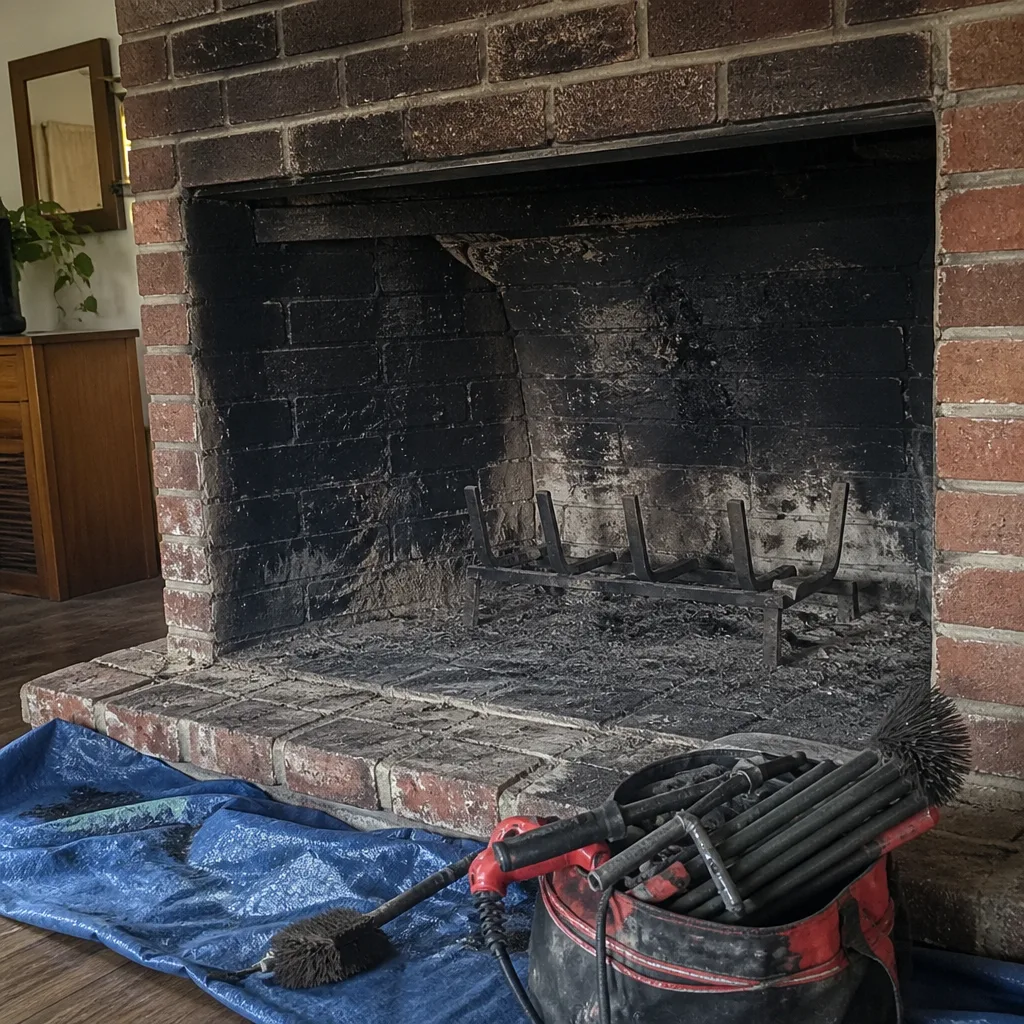 Before
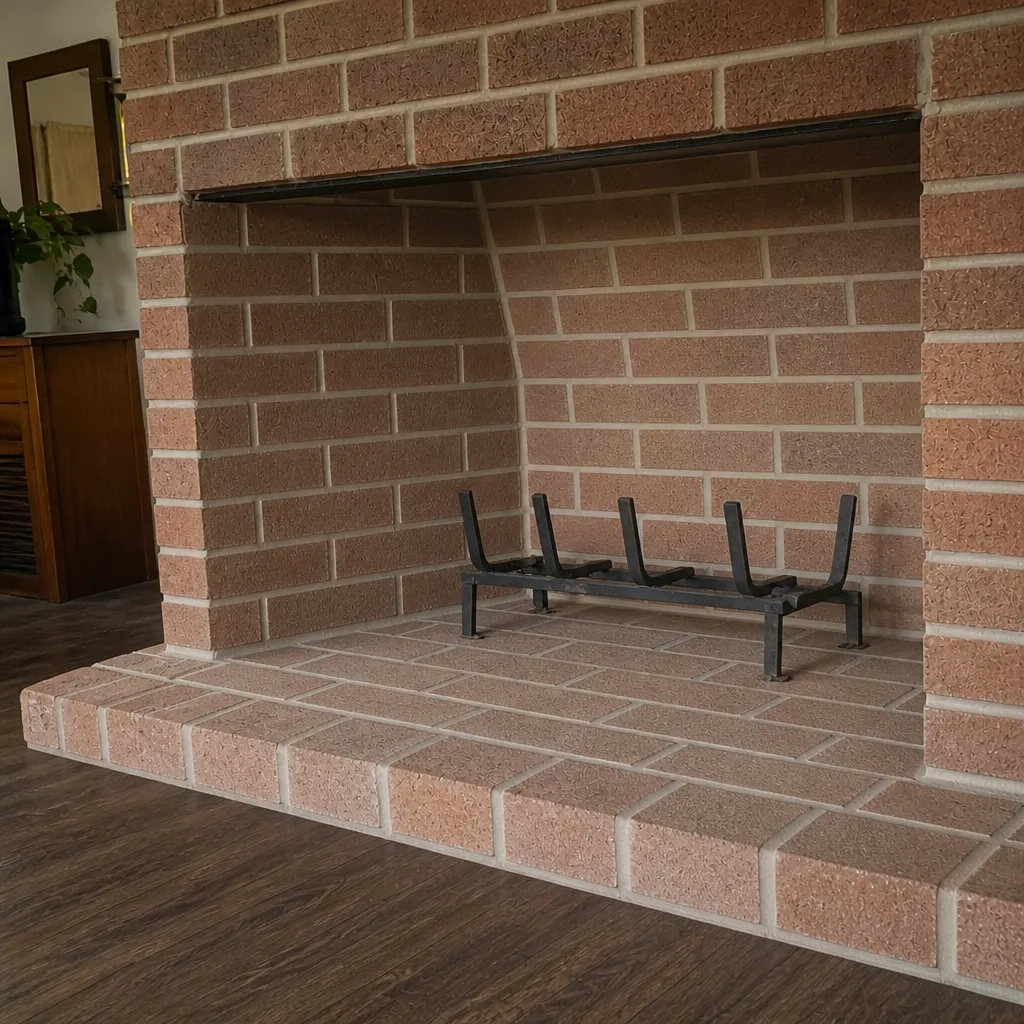 After
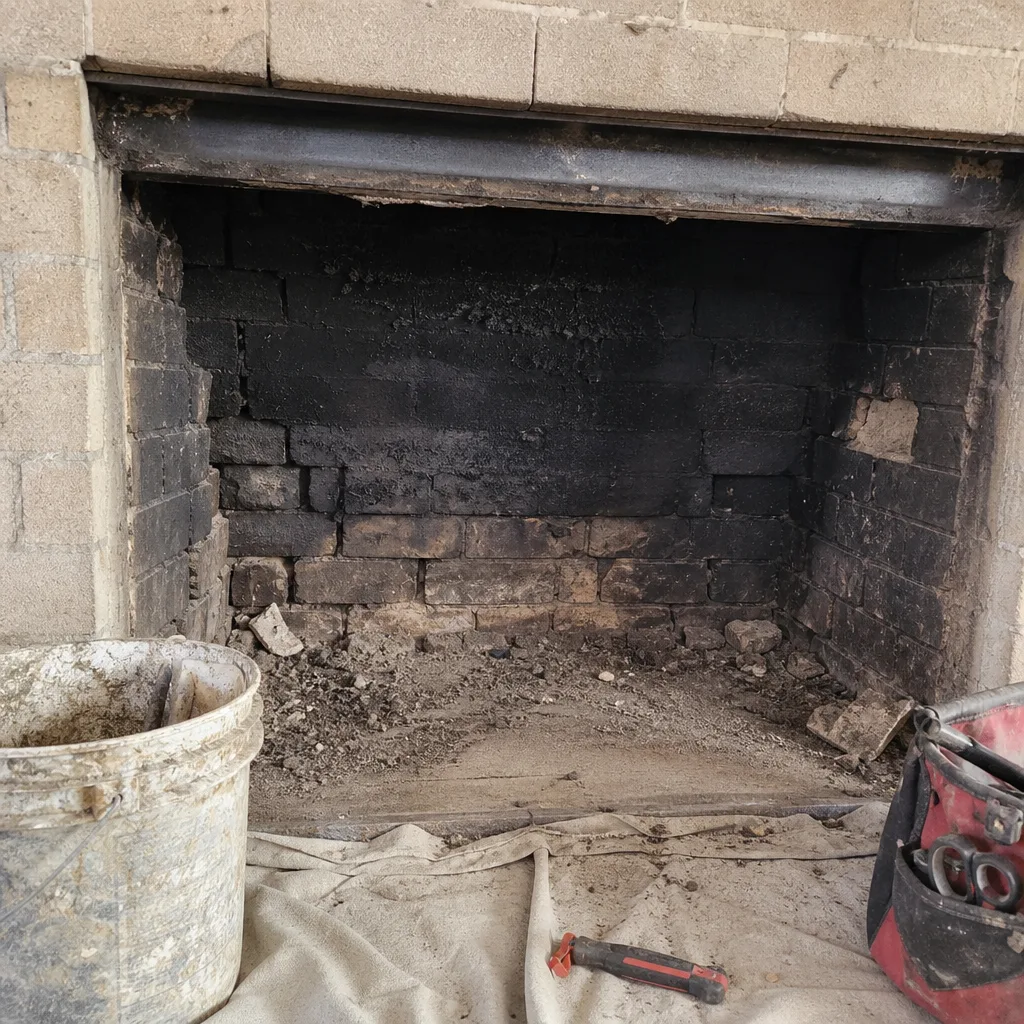 Before
 After
 Before
 After