
Famco Chimney Sweep in Erie: A Homeowner’s Guide
If a technician tells you your Famco cap needs replacing, most homeowners have no idea what that means, which puts them entirely at the mercy of whoever is on the roof with no ability to ask a useful follow-up question. Famco makes chimney and ventilation components that show up on a lot of homes around Erie, and knowing what those parts do gives you real leverage when someone proposes work. This guide covers what Famco makes, how to spot it on your own chimney, and when a component actually needs to go.
What Famco Makes That Ends Up on Your Chimney
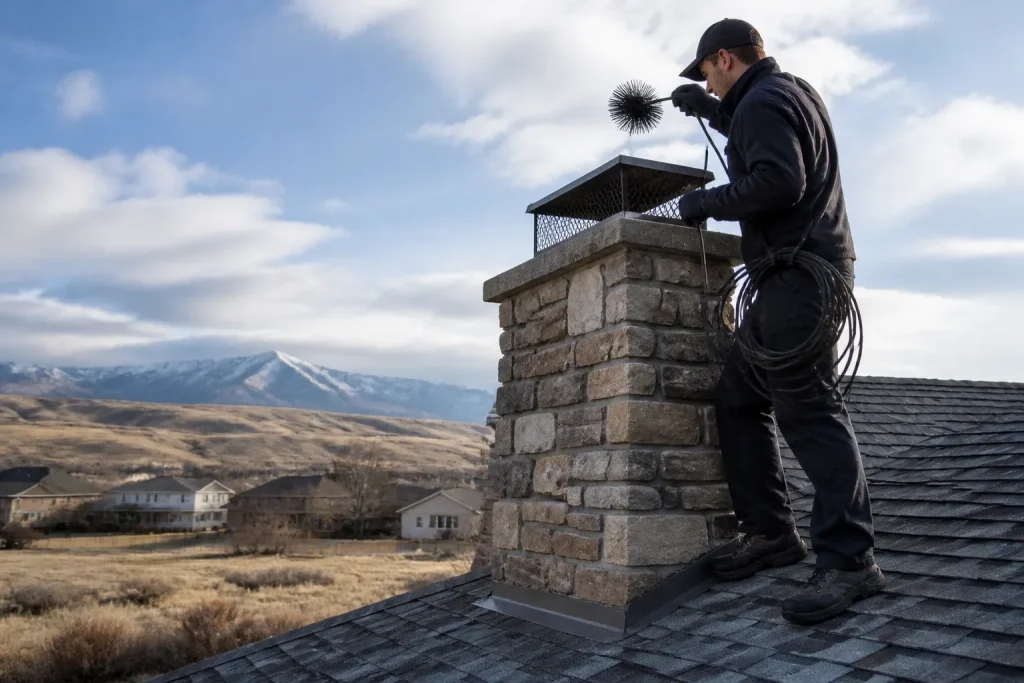
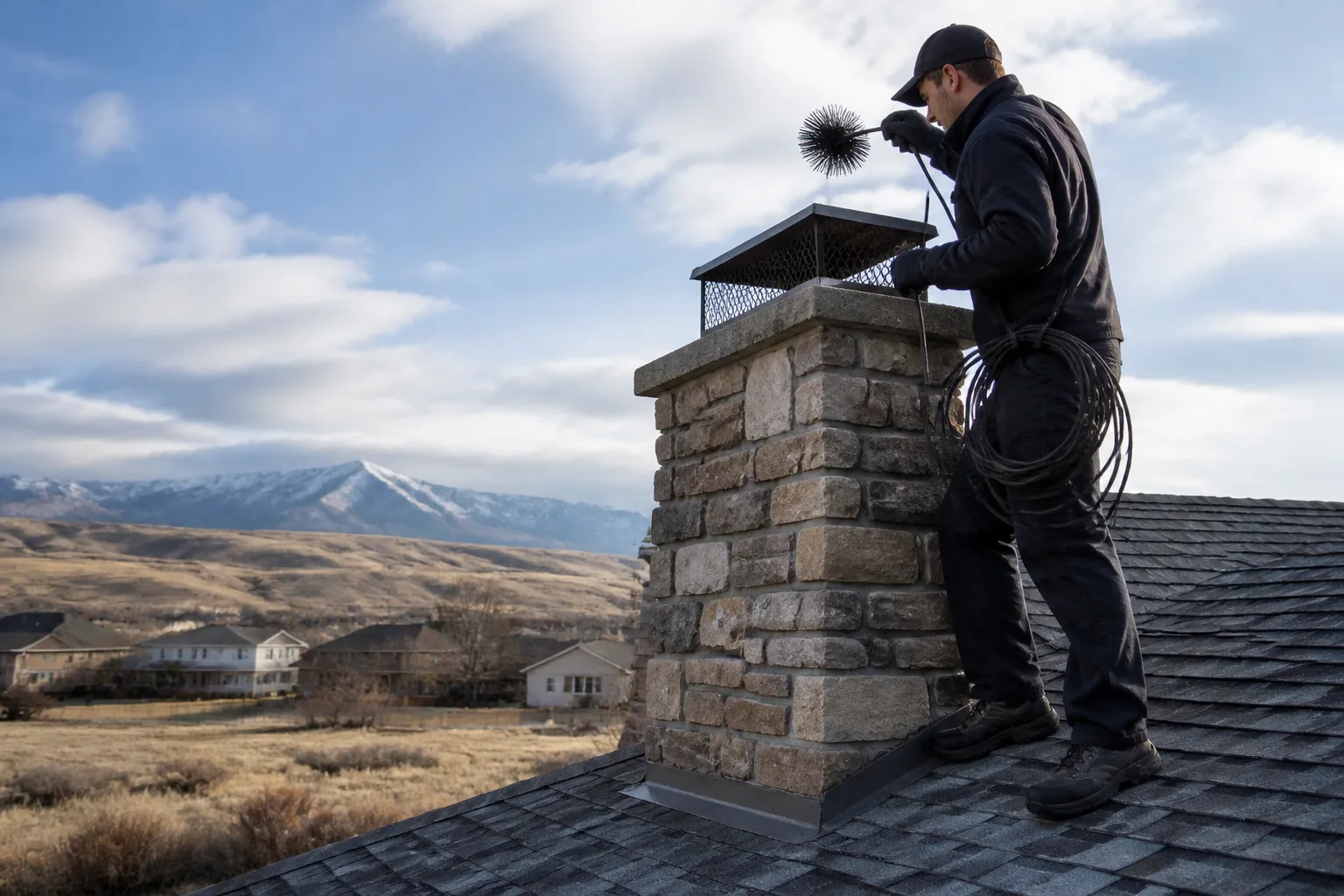
Famco manufactures chimney and ventilation components, and the pieces you’re most likely to find on an Erie home are caps, dampers, and ventilation fittings. A chimney cap sits on top of the flue and does three jobs: it keeps rain and snow out, it stops birds and squirrels from nesting inside, and it deflects wind-driven embers away from the roof. A damper is the metal plate inside the firebox that seals the flue when the fireplace isn’t in use, keeping heated room air from escaping up the chimney all winter. Ventilation components tie into how the whole system breathes.
To identify Famco components on your own chimney, look for a manufacturer’s stamp or label. Caps often carry a small plate on the skirt or the mesh frame with the brand and model number. Dampers mounted at the top of the flue sometimes have a visible bracket marking. If the label is weathered past reading, a technician can usually identify the style and match it. We name the brands we use because the materials behind a repair matter as much as the labor, and that goes double when you’re trying to figure out what’s already up there.
Why Famco Caps Fail Faster in Erie’s Wind and Snow
Erie sits on open ground where winter wind has very little to slow it down before it hits your roofline. That matters for caps. A cap is the most exposed piece of the whole chimney system, and it takes the full force of wind-driven snow, ice, and spring hail. The design purpose behind a Famco cap is straightforward: shed water away from the flue, hold up to wind without rattling loose, and keep animals out. When one fails in Erie, it usually fails in one of a few recognizable ways.
- Loose or missing mounting screws. Wind works screws back and forth until they wallow out of the metal. A cap that shifts in a gust is already compromised.
- Crushed or bent mesh. Snow load and ice falling from above can deform the spark screen, which narrows airflow and lets debris collect.
- Rust at the seams. Standing water in a poorly pitched cap finds the welds first.
- Ice dams forming on the cap itself. When meltwater refreezes at the top, it can pry apart seams over a season or two.
A missing or damaged cap is one of the most common entry points for water damage in a chimney. That water gets into the masonry, freezes, expands, and starts the slow process of spalling and cracked mortar. Preventive chimney care costs a fraction of what deferred repairs do, and the cap is where prevention starts.
Famco vs. Big-Box Components: What Actually Differs
The cap you buy at a hardware store and a professional-grade component like a Famco unit are not the same product wearing different stickers. The differences show up in material spec and expected lifespan, and they show up fastest in a climate like Erie’s where the roof takes a beating.
Professional-grade caps typically use heavier-gauge stainless or galvanized steel, with welded seams rather than folded tabs, and mesh sized to code for spark arrestance. Big-box equivalents often use thinner stock, spot welds, and a powder coat that’s more about shelf appeal than weather resistance. On a mild-climate house that difference might not matter for years. On an Erie roof, with freeze-thaw cycling from fall through spring, thin metal fatigues sooner. The same logic applies to dampers and to liner components. When we install a liner system, we use DuraFlex because it’s engineered specifically for the chimney environment, not adapted from something else. When we resurface a damaged flue, we use HeatShield for the same reason. Olympia Chimney and Copperfield round out the professional-grade roster we work with.
How to Compare What You’re Being Quoted
- Ask for the brand and model number of the replacement part, in writing.
- Ask what gauge and what alloy the cap or damper is made from.
- Ask whether the seams are welded or folded.
- Ask what the expected service life is in a freeze-thaw climate.
A contractor who can answer those four questions without hesitating is quoting you a real product. One who can’t is quoting you a price.
Repair or Replace? Triggers for Famco Caps and Dampers
Not every problem with a Famco component means replacement. Some issues are a repair, and knowing the difference keeps you from paying for work you don’t need. Here’s how we sort it out on a typical inspection.
Repair is usually the right call when: the cap is structurally sound but a screw or two has backed out, the mesh has a small dent that can be straightened, or the cap has shifted and needs to be re-seated and re-secured. A top-mount damper that’s sticking may just need lubrication and adjustment rather than a new unit.
Replacement is usually the right call when: the cap has rust-through at the seams, the mesh is crushed across a significant area, the frame is bent out of square, or the mounting points have wallowed out so far that new fasteners won’t hold. For dampers, replacement makes sense when the plate no longer seals, the frame is warped, or the mechanism has seized in a way that can’t be freed without damaging it.
What we won’t do is recommend a replacement without showing you why. One inspection can tell you exactly what your chimney needs, and what it doesn’t. If a cap can safely wait another season, we’ll say so. If it can’t, you’ll see the photos that make the case before anything is ordered.
How Knowing Your Component Brand Helps You Hire Well
When you know your chimney carries Famco components, you can have a much more specific conversation with whoever is quoting the work. Instead of “my cap is broken,” you can say “I have a Famco cap with rust at the seams and a bent mesh, and I’d like to know whether it can be repaired or should be replaced, and with what.” That single sentence changes the dynamic. It tells the contractor you’re paying attention, and it makes it much harder for someone to pad a quote with work your chimney doesn’t need.
It also helps you compare quotes fairly. If one contractor proposes a Famco replacement and another proposes a generic part, you now know those aren’t the same job. You can ask each of them why they chose what they chose. We handle the full chimney system, from the firebox to the crown, so when we inspect we’re looking at the cap, the damper, the flue, the firebox, and the masonry as one system. A generalist who splits that work across trades may not connect a failed cap to the water staining you noticed two rooms away. A single-trade focus means every job is evaluated by someone whose entire expertise is chimneys.
When to Call a Pro
Some chimney work is genuinely a job for a trained professional, and caps and dampers are near the top of that list. Replacing a cap means working at height on a roof, often in wind, and a fall from an Erie roofline is a serious event. Beyond the height risk, a cap that’s improperly sized or mounted can restrict draft and push smoke back into the house, which is a carbon monoxide concern. Dampers are a similar story: a misadjusted top-mount damper can leave the flue partially open in winter or fail to open fully when you light a fire. We’d rather you call than climb. Our technicians have up to 9 years of experience with chimney systems, and we’ll tell you plainly whether a component needs repair or replacement. If you’d rather not DIY, call (833) 468-5631.
Related services in Erie: our chimney sweep covers the annual cleaning that keeps the flue clear, our fireplace repair handles firebox and damper issues, and our chimney repair service addresses the masonry and crown work that water damage eventually demands. If you’re starting from scratch, the main Chimney Sweep Erie page lays out the full scope.
The Bottom Line
Famco makes chimney caps, dampers, and ventilation components, and understanding what those parts do gives you a real advantage when a technician is on your roof. Recognize the failure signs (loose screws, crushed mesh, rust at the seams), ask for brand and model in writing, and know the difference between a repair and a replacement so you can judge the scope of what’s being proposed. If you’re in Erie and need help, Chimney Sweep Erie offers free estimates. Call (833) 468-5631. We answer 24/7. Fast dispatch from 7am to 7pm, Sunday through Friday.
Frequently Asked Questions
Look for a small manufacturer’s plate on the cap’s skirt or mesh frame; Famco caps usually carry a brand and model stamp there. If the label has weathered away, a technician can identify the style by the mounting and mesh pattern during an inspection. Call (833) 468-5631 for a free estimate if you’re unsure.
It depends on the damage. Loose screws, small dents, and a shifted cap can usually be repaired. Rust-through at the seams, a crushed mesh across a large area, or a bent frame usually means replacement. We won’t recommend replacement without photo evidence you can see for yourself. Call (833) 468-5631 for an exact quote on either path.
Wind exposure and freeze-thaw cycling. Erie’s open ground lets winter wind hit rooflines with little to slow it, and meltwater that refreezes on a cap can pry apart seams over a season or two. A cap is the most exposed component in the whole chimney system, so it takes the worst of it.
Material spec and construction. Professional-grade caps typically use heavier-gauge steel, welded seams, and code-sized mesh, while big-box caps often use thinner stock and spot welds. In a freeze-thaw climate like Erie’s, that difference shows up in how many seasons the cap lasts before seams start to give. Call (833) 468-5631 for a free estimate on a replacement that’s built for the climate.
Written by the team at Chimney Sweep Erie.
Need Chimney Cleaning Help?
Call Chimney Sweep Erie - the local pro we connect you with is licensed and insured, with free written estimates in Erie.
(833) 468-5631